

5 Tips for Blending Colors in Big Stitch Quilting
Big stitch quilting uses thicker threads to create bold, visible stitches that add personality to quilts. Choosing the right thread colors can elevate your design by blending seamlessly with fabrics or creating striking contrasts. This guide covers five practical tips to improve your color blending skills:
- Match Thread and Fabric Colors: Use complementary or contrasting hues to achieve either subtlety or boldness.
- Mix Light and Dark Shades: Add depth by combining light and dark tones of the same color.
- Experiment with Thread Types and Weights: Different threads like cotton, wool, or silk create unique effects.
- Plan Color Placement: Thoughtfully position colors to highlight key design elements.
- Practice and Record Combinations: Use test blocks to refine your skills and document successful pairings.
These steps will help you create quilts with vibrant, balanced designs. Each project is an opportunity to explore how colors interact, ensuring your stitches make a statement.
Big Stich Quilting: Everything you need to know to get started!
Color Blending Basics
Knowing how thread and fabric colors interact can make or break your design. They can either fade into the background or take center stage, shaping the overall look of your quilt.
How Threads and Fabrics Work Together
Thread and fabric colors interact in two main ways: they either blend seamlessly or create bold contrast. Choosing thread colors that match or complement your fabric allows your stitching to merge effortlessly with the design, keeping the fabric pattern as the star of the show.
On the other hand, contrasting thread colors can turn your stitches into standout design elements. Many experienced quilters use a mix of blending and contrasting threads within a single project to keep things visually interesting. This approach lets you play with color variations across different sections of your quilt, adding layers of depth and creativity.
A simple way to test the effect of a thread color is to lay a piece of it across your fabric. This gives you a quick preview of whether it will blend in or stand out.
Variegated threads, which shift in color along their length, are another great option. They can tie together multiple fabric tones in a single quilt block, creating a lively, dynamic effect that adds movement and texture to your design.
For a polished and cohesive look, try picking thread colors that echo other elements in your quilt, like the binding, backing fabric, or accent pieces. This technique ties everything together, making your color choices feel purposeful and well-thought-out. Next, let’s dive into how thread weight and stitch size can further shape your design choices.
Thread Weight and Stitch Size Impact
The thickness of your thread and the length of your stitches play a big role in how your colors come across in the finished quilt. Big stitch quilting often uses thicker threads, which makes your color decisions more noticeable compared to traditional quilting.
Thicker threads amplify color impact. A subtle shade in a fine thread can become bold and eye-catching when used in heavy stitching, so it’s important to choose your colors thoughtfully.
Stitch size matters too. Larger stitches stretch the thread color across more fabric, which can either enhance the existing color scheme or introduce new tones that shift the overall design.
If you want your stitching to stand out as a key design feature, go for bright, contrasting thread colors. For a more unified look, stick with threads that match or complement your fabric’s palette, including the colors in your quilt’s blocks, binding, or backing. These small yet thoughtful choices can transform your quilt into a beautifully cohesive work of art.
Tip 1: Choose a Matching Color Palette
Creating a harmonious color palette is key to achieving seamless color blending in big stitch quilting. When your thread and fabric colors complement each other, the finished quilt feels intentional and polished instead of disorganized.
Start by identifying the dominant colors in your fabric collection. Focus on the main hues in your fabric and choose threads that enhance these colors, creating a unified look.
Think about the mood you want to convey. Warm tones like reds and yellows bring energy, cool tones like blues and greens evoke calmness, and neutrals provide balance. Let this mood guide your choices.
Using Color Wheels and Swatch Cards
A color wheel is an invaluable tool for planning fabric and thread combinations. Complementary colors, such as blue and orange, sit opposite each other on the wheel and create bold contrasts. Analogous colors, like blue, blue-green, and green, sit side by side and offer a more subtle, blended effect.
To maintain balance, apply the 60-30-10 rule: use 60% of a dominant color, 30% of a secondary color, and 10% as an accent. This ratio keeps your design visually appealing without overwhelming the viewer.
Swatch cards can also help you experiment with color combinations. Create your own by cutting small fabric squares and wrapping them with thread samples. Arrange these swatches in various groupings to find combinations that feel cohesive and pleasing.
For beginners, monochromatic schemes are a safe and effective choice. These use different shades and tints from the same color family. For example, pair light blue fabric with medium blue thread and dark blue accents for a polished, unified look.
Once you’ve narrowed down your options, test your palette to confirm it works as envisioned.
Test Colors Before Stitching
Always test your color combinations before committing to them. Lay your thread directly on your fabric to see how the colors interact. Thread can look very different on fabric compared to how it appears on the spool.
Be sure to test in different lighting conditions, as colors can shift dramatically between natural, LED, and incandescent light.
Create small test blocks using your chosen thread and fabric. Stitch a few inches of your intended pattern to see how the colors work together in practice. This hands-on preview can reveal interactions you might not notice otherwise.
Take photos of your test samples to evaluate them further. Sometimes, a camera can highlight subtle color relationships that are easy to miss with the naked eye. Capture images in both natural and artificial light for a thorough comparison.
Keep a record of successful combinations. These notes will save you time and effort on future projects!
Tip 2: Blend Light and Dark Shades
Adding depth and dimension to your big stitch quilting becomes easier when you mix light and dark shades. By playing with different values of the same color, you can transform a flat quilt into one that feels dynamic and layered. Color value - the lightness or darkness of a color - is key to creating this effect.
When you combine light, medium, and dark tones of a single hue, your quilt gains natural highlights and shadows. This technique mimics the way light interacts with objects, bringing a sense of realism to your work.
Light colors stand out; dark colors pull back. Light shades tend to draw attention and appear to move forward, while dark shades add depth by seeming to recede. Use this principle to decide where each shade fits best in your design. Gradients can help you achieve a smooth transition between values.
Create Depth with Gradients
Gradients are a fantastic way to create smooth transitions and add a polished look to your quilt. Start by sketching your design and marking where light, medium, and dark values will go. Place lighter hues at focal points and darker ones along the edges to create contrast.
When stitching a gradient, overlap thread colors where they meet. This avoids harsh lines and ensures a natural flow. Shorter stitches in these overlap areas help blend the colors seamlessly. Before committing to your main project, test your gradient on a practice block. Stitch from light to dark and adjust the overlaps until the transitions feel smooth and cohesive.
Once your gradient is set, you can emphasize your design further by using light and dark shades to define key features.
Highlight and Soften Quilt Features
Thoughtful placement of light and dark threads can guide the viewer’s eye and emphasize important parts of your quilt. Use your lightest threads to highlight focal points, like the center of flowers, the tops of geometric shapes, or other standout elements in your pattern.
Dark threads, on the other hand, create shadows and define edges. For example, you can stitch darker shades along the bottom edges of shapes, in corners, or around the borders of design elements to give them a lifted, three-dimensional look.
To soften transitions between sections, choose medium-value threads. These middle tones help bridge the gap between light and dark areas, preventing harsh contrasts while maintaining depth.
Lastly, consider an imaginary light source to keep your shading consistent. For instance, if you imagine light coming from the upper left, place your lightest stitches on the upper left sides of shapes and your darkest stitches on the lower right sides. This approach ties everything together, making your quilt feel balanced and realistic.
Tip 3: Try Different Thread Types and Weights
The type and weight of thread you choose can dramatically influence how colors interact on your quilt. Each thread material brings its own character, enhancing or softening color transitions in unique ways.
Thread weight measures the thickness of the thread. Lower numbers mean thicker threads, while higher numbers indicate finer ones. For big stitch quilting, thread weights usually range from 8 to 28. This choice not only affects the visibility of your stitches but also plays a key role in how colors blend on the fabric.
Different thread materials create distinct effects. Cotton threads provide consistent, vibrant colors and are great for precise color matching. Wool threads, on the other hand, offer a softer, muted look, blending colors naturally. Silk threads add a gentle sheen, which can either brighten or tone down colors depending on the lighting.
Compare Thread Types for Unique Effects
Beyond thread weight, the material you use - whether it’s perle cotton, sashiko, or wool - makes a big difference in how colors and textures come together. Here’s a closer look at how each type performs:
- Perle cotton: Known for its twisted construction and even thickness, perle cotton is a favorite for big stitch quilting. Size 8 perle cotton creates bold, prominent stitches, while size 12 produces finer, more delicate lines. This thread type is excellent for creating clean, sharp color transitions.
- Sashiko thread: With its slightly uneven texture, sashiko thread adds a handcrafted, organic feel to your quilt. Its subtle variations in thickness enhance the texture, making it a great option for projects where you want a more natural, less polished look.
- Wool thread: Wool offers the softest color blending effects. Its natural fibers reflect light in a way that gives colors a warm, muted appearance. The fuzzy texture of wool is particularly effective for creating gentle gradients, making it ideal for nature-inspired or subtle designs.
Thicker threads (lower weight numbers) emphasize bold color choices with prominent stitches, while thinner threads allow for more delicate designs and smoother color blending.
Test Threads on Fabric Scraps
Before committing to a thread, it’s wise to test it on fabric scraps. This helps you fine-tune tension, coverage, and overall appearance. As HoopTalent suggests:
Always stitch a sample to check for tension, coverage, and appearance.
Testing your thread on the actual fabric you’ll use gives you a preview of how the colors will appear once stitched. Sometimes, a thread that looks perfect on the spool might feel too bold or too subtle when applied to your quilt.
For the best results, stitch test swatches in the same sequence you plan to use for your project. This allows you to see how colors transition from one to the next. As Threaded Lines advises:
Experiment: Don't be afraid to try different thread weights and see how they affect the look and feel of your projects. Each weight brings its own unique texture and dimension.
If you’re mixing thread weights in one project, test them together on scraps to ensure smooth blending. Adjust your needle size and tension to accommodate the thickest thread you’re using, which helps avoid issues like puckering or loose stitches.
Finally, keep your test swatches organized. Label them with details like thread type, weight, and any adjustments you made. These swatches will become a valuable resource for future projects, helping you refine your techniques and discover successful thread and color combinations.
sbb-itb-907b860
Tip 4: Plan Your Color Placement
Thoughtful color placement can take your quilting to the next level by creating depth and focus. It allows certain elements to stand out while others fade into the background. Think of your quilt as a story told through color, where darker tones draw attention, lighter shades offer breathing room, and medium hues tie everything together seamlessly. Taking time to plan your colors now can save you from frustration and wasted materials later.
Start by sketching your design using paper or small fabric scraps. This will help you spot any clashing colors or overly busy sections before you commit. Once you’re happy with your layout, outlining techniques can help define and elevate your design.
Outline and Fill Patterns
Using color to outline shapes adds structure and clarity to your quilting. Dark thread works especially well for outlining because it creates sharp boundaries around appliqué pieces, geometric shapes, or quilting motifs. This technique ensures that individual design elements stand out clearly against the background.
For instance, imagine a floral appliqué quilt. You could outline each flower with a rich green thread, then fill the petals with soft pink or yellow stitching. The dark outline emphasizes the shape of each flower, while the lighter fill adds a sense of depth and softness. Size 8 perle cotton is a great choice for bold outlines that pop against busy patterns.
When working on background areas, opt for colors that support your main design rather than competing with it. If your focal points feature warm tones like reds and oranges, cooler shades like blues or greens can provide a calming contrast. This approach keeps your quilt visually balanced and prevents it from feeling chaotic.
For filling techniques, consider using gradual color transitions. Start with your darkest shade at the edges of a shape and blend into lighter tones toward the center. This creates a three-dimensional effect and avoids the flat, mechanical look that can sometimes occur with uniform stitching.
Direct the Viewer’s Eye
Once your outlines are in place, you can use them to guide the viewer’s eye across your quilt. Strategic color placement acts like a roadmap, directing attention to key areas. Bright, vibrant colors naturally draw the eye first, so use them at focal points where you want viewers to linger. From there, softer or more muted tones can lead the eye to secondary elements.
To unify your design, repeat vibrant colors in smaller doses throughout the quilt. This creates a sense of rhythm and keeps the overall composition cohesive and engaging.
Contrast also plays a big role in how your quilt is perceived. High contrast between thread and fabric colors creates bold, graphic effects that work well for modern or geometric designs. On the other hand, low contrast produces a more subtle, refined look, perfect for traditional or vintage-inspired quilts. Medium contrast offers a versatile middle ground, giving definition without overwhelming the viewer.
Tip 5: Practice and Improve Your Color Blending
Getting the hang of color blending in big stitch quilting doesn’t happen overnight - it’s a skill that grows with time and hands-on experimentation. The best way to build confidence in mixing colors is by working on small, easy-to-manage projects. These allow you to try out different techniques without committing to a full-sized quilt, making the learning process less overwhelming and more fun.
Start with simple color combinations and gradually explore more intricate blends. Every practice session offers a chance to see how threads interact with different fabrics. The key is patience - view each attempt as a stepping stone toward improvement. A great way to refine your skills is by creating small test projects that let you focus entirely on color blending.
Use Practice Blocks
One of the most effective ways to test color combinations is by working with practice blocks. Cut fabric squares measuring about 6 inches by 6 inches and experiment with various thread options. This size is perfect for trying out stitching patterns without using too much material.
Dedicate each practice session to exploring a specific color relationship. For instance, you could spend an afternoon testing shades of blue thread - navy, medium blue, and light blue - on a cream-colored fabric. Observe how each shade creates a unique visual effect. On another day, you might experiment with warm tones like rust, orange, and yellow on the same fabric.
Once you’ve finished stitching, step back about 3 feet to see how the colors blend from a distance. A combination that feels bold up close might create a subtle, harmonious effect when viewed from farther away. This perspective helps you understand how your finished quilt will look to others.
Don’t shy away from trying unconventional pairings, like purple on yellow or bright green on pink. These high-contrast combinations can add a modern touch and make your quilting stand out in exciting ways.
Keep Records of Good Combinations
To make the most of your practice, keep a record of the color combinations that work well. Use a notebook or photo album to document your successes. Include fabric swatches, thread samples, and notes about what made each pairing effective.
Take clear photos of your practice blocks in natural light, as artificial lighting can alter how colors appear. Add details about the threads, fabrics, and stitching techniques you used. For example, note whether you tried running stitches, cross-hatching, or echo quilting, as these patterns can dramatically change how colors interact.
Organize your records in a way that works for you. You could group them by color family - warm tones, cool tones, or high-contrast pairings - or by project type. Some quilters even create seasonal sections, with combinations suited for spring florals, autumn leaves, or winter holiday themes. This organization makes it easier to find inspiration when starting new projects.
Revisit your records often, especially when you’re feeling stuck or searching for fresh ideas. Looking back at your past successes can reignite your creativity and remind you of techniques that worked well. Over time, this personal library of proven combinations will help you grow more confident in your color blending skills.
Resources from Mrs. Quilty
Mrs. Quilty is your go-to source for supplies and guides designed to enhance your color blending skills in big stitch quilting. The site offers carefully selected materials and beginner-friendly instructions to help you confidently combine colors and create eye-catching quilt designs. Here’s a look at some of the standout tools and resources available to take your quilting projects to the next level.
The Mrs. Quilty Box
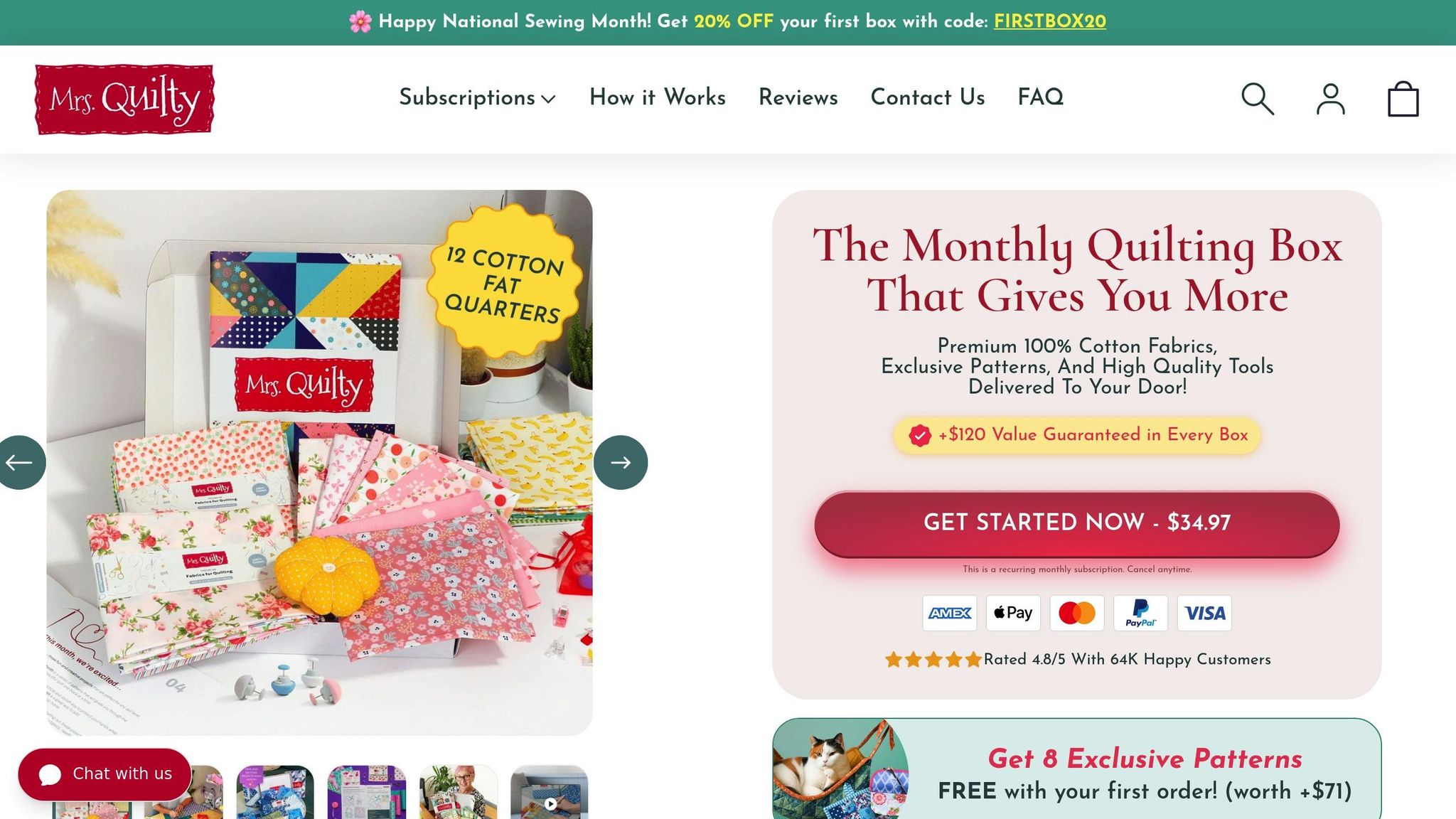
This monthly subscription box is a treasure trove for quilting enthusiasts, delivering handpicked supplies straight to your door. Each box is packed with 12 coordinated fat quarters made from 100% cotton fabric, thoughtfully chosen to complement one another. It also includes patterns, a quilting magazine, and surprise gifts that often feature different thread types and weights - perfect for experimenting with textures and colors.
One of the highlights is the Block of the Month project, which provides a structured way to practice and apply your skills in real quilting scenarios. The subscription comes with flexible options, and if you commit to the 12-month plan, you can save up to 9%.
Digital Patterns and Starter Kits
For those who enjoy blending hands-on projects with digital inspiration, Mrs. Quilty offers a range of tools to spark your creativity.
The downloadable PDF quilt patterns are a great starting point. These patterns come with bonus tips for playing with bold fabric combinations and experimenting with thread colors. Some popular options include the Digital Quilting Guide + 105 Rotary Templates for $22.99, Katie the Kitten for $8.97, and Mrs. Cluckworth for $14.97. Each pattern encourages you to explore new color combinations while working on structured designs.
For beginners, the starter kits are a game-changer. Available in 39-piece and 97-piece options, these kits include essentials like rotary cutters, cutting mats, rulers, and sewing clips. These tools are designed to help you achieve clean, precise cuts and consistent results, making it easier to refine your color blending techniques. Plus, the digital format allows you to get started right away, with the added bonus of being able to print multiple copies to try out different color schemes on the same design.
Conclusion: Simple Color Blending
To refine your big stitch quilting, focus on five key practices: matching color palettes, blending shades, experimenting with thread types and weights, strategic placement, and consistent practice with careful documentation. Testing thread colors on fabric scraps and keeping notes on successful combinations will help you perfect your technique over time. These steps ensure that each stitch adds harmony and vibrancy to your designs.
By following these principles, you can create quilts with both depth and visual balance. Big stitch quilting allows for creative exploration, making it a forgiving and enjoyable process. For example, outlining or highlighting specific areas with both light and dark shades of the same color can add striking dimension to your quilt. Many quilters find this approach particularly effective when using threads like Perle #5 or Aurifil 12 weight, which offer bold, eye-catching results.
If you're looking for support and inspiration, Mrs. Quilty offers excellent resources to help you practice these techniques. The Mrs. Quilty Box includes coordinated fabrics, digital patterns, and starter kits, giving you everything you need to experiment with color blending in a structured way. Start small with practice blocks, build your confidence gradually, and remember - every project is an opportunity to learn how colors interact in big stitch quilting.
FAQs
How can I use contrasting thread colors to make my quilt design stand out?
Using contrasting thread colors can really make your quilting stitches stand out, turning them into a striking feature of your design. For a bold and eye-catching effect, opt for thread colors that strongly contrast with your fabric - think dark thread on light fabric or light thread on dark fabric. This approach transforms stitching into a decorative highlight.
If you're after something more playful, consider using variegated threads. These threads shift between colors, adding a sense of depth and movement, especially in scrappy or colorful quilts. On the flip side, matching your thread to the fabric’s background color creates a subtle, seamless look that lets the fabric take center stage. Try out these techniques to discover what works best for your quilt!
What are the advantages of using different thread types and weights in big stitch quilting?
Using different thread types and weights in big stitch quilting can bring new depth and personality to your project. Heavier threads (like 12–40 weight) are ideal for bold, decorative stitches that become a striking part of the design. Meanwhile, lighter threads (50–60 weight) offer a softer, more understated look. They’re also great for reducing bulk, which helps create smoother, flatter seams.
Playing around with different thread weights gives you more control over stitch density, tension, and the overall texture of your quilt. This approach not only adds variety but also allows you to tailor each project to your creative vision, all while ensuring the quilt remains sturdy and well-constructed.
What’s the best way to test and keep track of successful color combinations for quilting?
Experimenting with Color Combinations
Try making small fabric swatches using your selected threads and fabrics to see how they complement each other. If you prefer a digital approach, there are plenty of apps and tools that let you visualize different color palettes. To keep track of your favorites, snap some photos and jot down notes in a color journal. This can become a valuable resource for your future quilting projects!