

How to Choose Fat Quarter Bundles
Fat quarter bundles simplify fabric selection by offering pre-coordinated pieces perfect for quilting projects. These bundles save time, ensure matching patterns, and inspire creativity. In this guide, you'll learn how to pick the right bundle by understanding your project needs, choosing colors and patterns, and prioritizing fabric quality. You'll also discover tips for efficient cutting and using every scrap effectively. Whether you're making a baby quilt or a decorative throw, fat quarter bundles are a convenient way to bring your quilt designs to life.
How To Choose Your Fat Quarters! - Fat Quarter Quilting Fun
Step 1: Figure Out Your Project Requirements
Start by identifying the type, size, and purpose of your project. This will help you choose a fat quarter bundle that aligns with your needs, making your quilting process both efficient and enjoyable.
Check Your Project Type and Size
The amount and type of fabric you need depend on your project's scale and its intended use. For example, a small project like a baby quilt might require just a few fat quarters, while a larger quilt will need more. Think about how the finished quilt will be used. If it’s for everyday use and frequent washing, sturdy, high-quality cotton is a great choice. On the other hand, for a decorative wall hanging or a seasonal throw, more delicate fabrics can work beautifully.
Also, consider the color palette and durability of the fabric in relation to the quilt’s purpose. Daily-use quilts benefit from durable cotton in practical tones, while lighter, decorative fabrics are perfect for display pieces. Matching the fabric to your project ensures you’ll have the right quantity and style for your design. Finally, confirm that your chosen quilt design fits the dimensions of your planned project.
Does Your Pattern Work with Fat Quarters?
Not all patterns are ideal for fat quarters, so it’s important to check compatibility. Look for patterns specifically designed to work with these pre-cut fabric pieces. Classic patterns like Log Cabin, Nine Patch, or samplers are fantastic options because they utilize fat quarters efficiently. However, if your pattern requires large, continuous pieces of fabric, you might need to purchase additional yardage or adjust your design to suit the materials at hand.
Step 2: Pick Colors and Patterns
Once you've nailed down your project requirements, it’s time to choose the colors and patterns that will bring your quilt to life. This step is key - it sets the tone for the entire project. Take a moment to think about what resonates with you and aligns with the purpose of your quilt.
Pick a Color Scheme
Start by selecting a color palette that suits both the quilt's purpose and your personal taste. Think about where the quilt will be used: calming tones work well for a bedroom, while bold or warm shades might be perfect for a living room throw.
A helpful tool for this process is the classic color wheel. Use complementary colors for striking contrast or analogous colors for a more harmonious look. If you prefer something sleek and cohesive, a monochromatic scheme - using various shades of the same color - can create a polished effect.
The 60-30-10 rule is a handy guideline: dedicate 60% of your quilt to a dominant color, 30% to a secondary color, and 10% to an accent. This approach ensures balance and avoids visual overload. For inspiration, look to nature, artwork, or even a favorite photograph to spark ideas for your palette.
Once your colors are set, it’s time to think about patterns that will complement them.
Choose Patterns That Fit Your Style
Patterns play a big role in the overall feel of your quilt. Smaller prints work well for backgrounds, medium-scale designs are great for focal points, and large-scale prints can make a bold statement - but they require careful planning. With limited fabric yardage in fat quarters, ensure that large motifs fit neatly within your quilt blocks without being awkwardly cropped. Directional prints (those with a clear top and bottom) also need extra attention to maintain a consistent visual flow.
Your quilting style can guide your pattern choices. If you lean toward traditional quilting, you might love florals, paisleys, or vintage-inspired prints. On the other hand, modern quilters often go for geometric designs, abstract patterns, or bold, graphic prints. Themed fabric bundles are perfect for creating seasonal quilts, kid-friendly projects, or holiday decor.
To keep your quilt from feeling too busy, balance patterned fabrics with solids or subtle designs.
Include Solids or Basic Patterns
Solids and simple patterns are essential for creating balance in your quilt. These "quiet" fabrics give the eye a place to rest and help highlight more intricate prints. Solid colors are especially effective for showcasing detailed piecing or complex designs.
For a touch of texture without overwhelming the design, consider tone-on-tone fabrics - subtle patterns in similar shades that mimic the effect of solids. Small dots, stripes, or simple checks can also act as a bridge between busy prints and solid colors, ensuring a smooth and cohesive look.
When choosing a fabric bundle, aim for a mix of pattern scales and visual weights. A bundle with only large-scale prints might feel chaotic, while one with all small designs could seem dull. Curated bundles, like those from Mrs. Quilty, often include a thoughtful balance of prints and solids, making it easier to create a harmonious design.
sbb-itb-907b860
Step 3: Check Fabric Quality and Where to Buy
Once you've settled on your colors and patterns, the next step is all about fabric quality and sourcing. This choice directly impacts how your quilt will look, feel, and hold up over time.
Why Choosing Quality Quilting Cotton Is Important
Investing in good quilting cotton makes a world of difference. It ensures precise cutting and helps your seams lie flat. Look for cotton with a thread count of 60-80 threads per square inch, as its dense weave minimizes fraying and allows for smoother quilting.
Long-staple, pre-shrunk cotton is a smart choice. The longer fibers in premium cotton create a smoother, stronger fabric that resists pilling and holds up better over time. In contrast, cheaper cotton often uses shorter fibers, which can break down quickly, leaving the fabric looking fuzzy and less durable. Pre-shrunk fabrics are another must - they maintain their size and shape after washing, saving you from unpleasant surprises that could throw off your carefully measured quilt pieces.
Where to Buy Your Fabrics
To ensure your quilt turns out beautifully, sourcing fabrics from trusted retailers is key. Established sellers often curate their collections to guarantee consistency in weight, texture, and color. For example, Mrs. Quilty offers thoughtfully curated fat quarter bundles made from premium cotton, designed specifically for quilting projects.
If you're looking for a convenient way to discover new combinations, Mrs. Quilty's subscription service is worth considering. Each month, you'll receive 12 premium cotton fat quarters along with coordinating patterns and tutorials. This service helps you experiment with new color palettes and designs that you might not have explored on your own.
When evaluating fabric suppliers, pay attention to the details. Reputable sellers provide thorough descriptions, including the manufacturer, collection, and fiber content. They also ensure accurate color representation in their photos and offer clear information about the fabric's characteristics. Reliable retailers back their products with fair return policies, so you can shop with confidence.
Don't overlook packaging and shipping practices either. Quality suppliers take care to protect fabrics during transit, preventing wrinkles, fading, or damage. This attention to detail ensures your fabrics arrive in pristine condition, ready for your next project.
Once you've secured high-quality fabrics from a reliable source, you're ready to plan your cuts and make the most of every fat quarter.
Step 4: Get the Most from Your Fat Quarter Bundle
Once you've chosen your fabrics and created a cutting plan, it's time to make the most of your fat quarter bundle. Careful planning and thoughtful cutting will help you maximize your fabric while keeping waste to a minimum.
Plan Your Cuts to Avoid Waste
Start by sketching out your cutting plan. A fat quarter typically measures about 18″ × 22″, giving you roughly 396 square inches to work with. Begin by cutting the largest pieces your pattern requires, and then move on to smaller elements. This ensures you use your fabric efficiently.
When cutting, align the largest pieces with the straight grain of the fabric to avoid stretching. If you're making a quilt that requires several pieces from the same fabric, arrange them closely to reduce gaps and wasted material. If you're working on a sampler quilt or don't have a specific pattern in mind, consider cutting versatile sizes like 5″ squares, 2.5″ strips, or 6.5″ squares. Once you've cut the main pieces, you can focus on using the leftover fabric creatively.
Get Creative with Leftovers
Don't let those scraps go to waste! Use leftover fabric for appliqué, binding, or small accessories. Small scraps can also be pieced together for a unique quilt backing that adds character to your project. You could even turn them into coordinating items like pot holders, coasters, or zipper pouches - perfect for practicing new techniques while making something useful.
Strips that are too narrow for your main project can serve as borders for smaller blocks or as sashing between quilt sections. Even tiny bits of fabric can be used for paper piecing or as foundation pieces in art quilts.
Explore Mrs. Quilty Resources
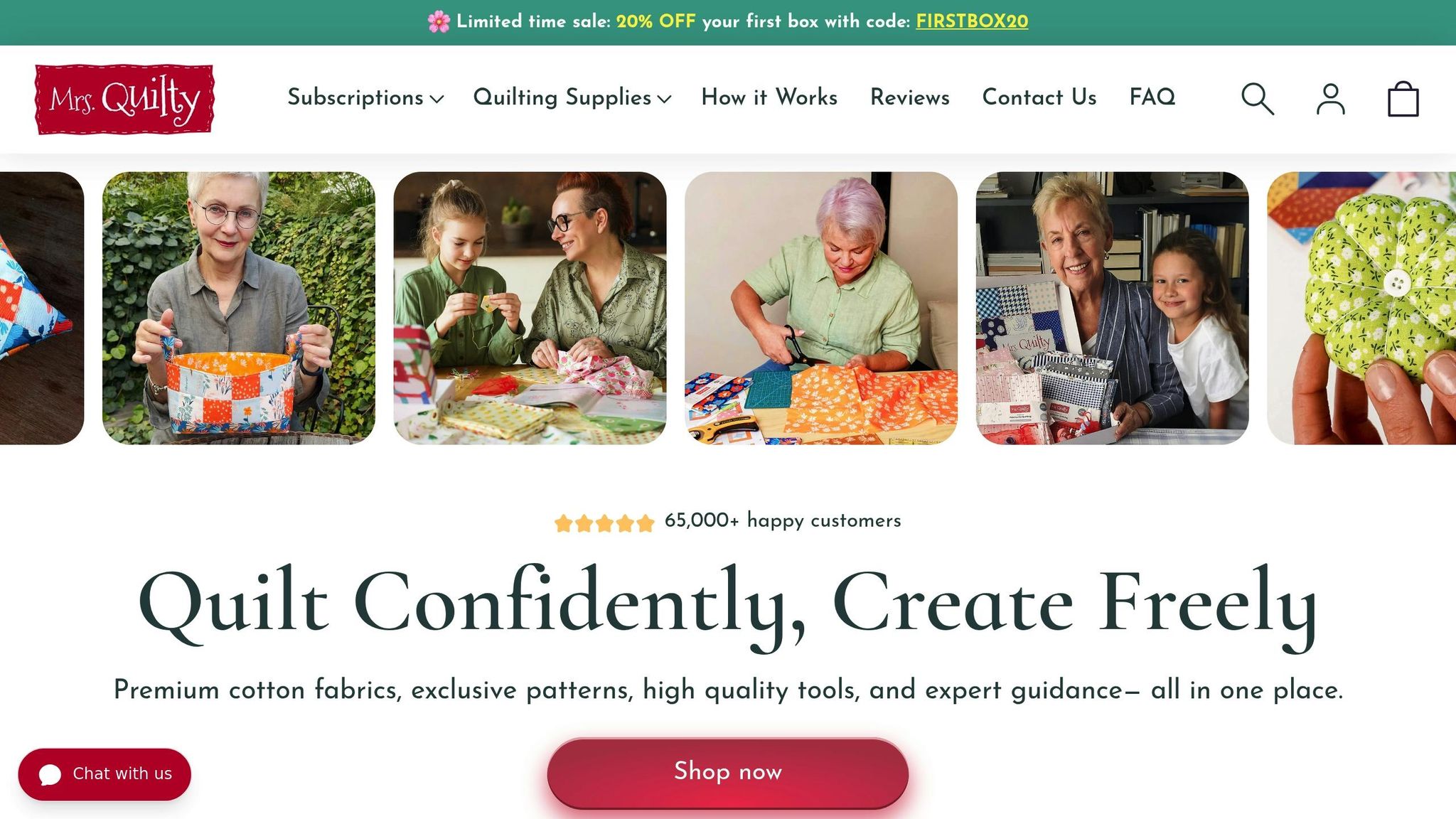
For extra help with your cutting strategy, check out Mrs. Quilty's resources. Her digital patterns and cutting diagrams are designed to minimize waste while helping you create stunning projects. These resources include layout suggestions and beginner-friendly kits that make the process easier.
If you're looking for curated bundles and tutorials, Mrs. Quilty's subscription service is a great option. Beginners, in particular, will appreciate her pre-selected fat quarter kits, which come with detailed instructions to guide you through fabric cutting and piecing. It's a hassle-free way to get started while ensuring your fabric is used efficiently.
Key Points for Choosing Fat Quarter Bundles
When picking a fat quarter bundle, it’s important to align it with your project’s requirements. First, make sure your pattern is compatible with the typical 18″ × 22″ size of fat quarters. Think about whether you need fabrics in coordinated colors or prefer a mix of patterns and shades. Look for bundles that offer a good balance of light, medium, and dark tones to give your quilt depth and dimension.
Fabric quality plays a big role in the final result. Opt for quilting cotton that feels sturdy and resists fraying. Premium 100% cotton with a tight weave will hold its shape and maintain its vibrant colors even after washing. The material should feel substantial when you handle it - this is a good indicator of durability.
To get the most out of your bundle, plan your cuts carefully. Start with the largest pieces you need and work your way down to smaller cuts to minimize waste. Even the smallest scraps can be saved for appliqué, binding, or future projects, so nothing goes unused.
For those who want convenience without compromising on quality, Mrs. Quilty offers a solution. Their curated fat quarter bundles take the guesswork out of fabric selection. Through their subscription service, the Mrs. Quilty Box, you’ll receive 12 premium cotton fabrics each month, perfectly coordinated and paired with patterns designed for fat quarters. This makes color matching effortless and ensures you always have high-quality materials on hand.
Experienced quilters know that fat quarter bundles are the foundation for creative designs. Combine these bundles with solid or accent fabrics to craft quilts that are both cohesive and uniquely yours. This approach gives you the freedom to experiment while still benefiting from the harmonious color schemes that fat quarter bundles provide.
FAQs
How do I know if a fat quarter bundle will work for my quilting project?
To determine if a fat quarter bundle suits your project, check whether the quilting pattern specifies being fat quarter friendly or mentions fabric cuts measuring around 18" x 22" - the typical size of a fat quarter. Also, review the pattern's design to see if it works well with the bundle's colors and prints. Fat quarters are ideal for projects that call for smaller fabric pieces or a mix of prints to create visual variety.
If you're feeling uncertain, try starting with a pre-selected bundle, like the ones from Mrs. Quilty. These bundles often feature coordinated fabrics that work well with many different patterns.
How can I mix and match colors and patterns in a fat quarter bundle to create a cohesive quilt design?
To design a quilt that feels unified and visually pleasing, start by picking a color scheme that complements itself. Options like complementary or analogous colors work beautifully because they naturally create a sense of harmony. When choosing fabrics, take a close look at their color palette - the small selvage dots along the fabric's edge can be a helpful guide for matching shades accurately.
For patterns, aim for variety in scale. Mix large florals with medium-sized geometrics and smaller prints, ensuring they share some common colors to keep things balanced. Use contrasting patterns sparingly - they can add a pop of interest but might overwhelm the design if overdone. By blending well-matched colors with a thoughtful mix of patterns, you’ll create a quilt that feels cohesive yet lively.
What should I look for to ensure the quilting cotton in a fat quarter bundle is high quality?
When choosing quilting cotton in a fat quarter bundle, there are a few important details to keep in mind to ensure you’re getting good quality fabric. Start by selecting 100% cotton with a high thread count - at least 60 threads per inch. This ensures the fabric is durable and has a smooth, polished texture. A tight weave is also essential for creating a sturdy quilt that will hold up over time.
Pay attention to shrinkage as well. Look for fabric with minimal shrinkage, ideally in the range of 1-3%, so it keeps its shape after washing. Lastly, check the fabric’s weight. Quilting cotton typically works best when it’s between 140-160 gsm. This weight strikes the perfect balance, making the fabric easy to handle while providing a professional, long-lasting finish to your quilt.