

The Psychology of Your First Finished Quilt
Completing your first quilt is a big step. It’s more than just sewing fabric - it’s proof that you can take on challenges, learn new skills, and finish what you start. Many beginners worry about mistakes or wasting materials, but even an imperfect quilt is a success. It shows growth, patience, and determination. Plus, finishing a quilt can boost confidence and even reduce stress, making it a rewarding experience in more ways than one.
Let’s explore how finishing your first quilt can change your mindset and help you overcome common beginner hurdles.
Mental Hurdles Beginners Face
Fear of Mistakes and Perfectionism
Starting out in quilting can feel like stepping into a minefield of potential mistakes. For many beginners, the fear of cutting fabric incorrectly, sewing crooked seams, or misaligning blocks can be overwhelming. Thoughts like, "If this isn't perfect, I'm wasting fabric" or "Real quilters wouldn't make this mistake" can creep in, leading to hesitation and overthinking. Some might spend hours redoing stitches or refuse to move on until every block looks flawless.
This mindset can be discouraging. A single error may cause some beginners to pack their projects away, convinced they've failed. Others may fall into the trap of endlessly scrolling through social media for "research", comparing their first attempts to seasoned quilters' masterpieces and feeling inadequate. Ironically, the real confidence boost comes from finishing a quilt - imperfections and all. Research from Utah State University even shows that creative activities like quilting can lower cortisol levels (a marker of stress) by up to 75%, but only if you actively engage in the process rather than avoiding it.
Perfectionism isn’t the only obstacle - just the sheer number of choices can feel paralyzing.
Too Many Choices, Too Little Clarity
The quilting world is a treasure trove of options, but for beginners, it can feel more like a maze. From countless fabric prints to an array of pattern styles and tools, the abundance can be overwhelming. Questions start piling up: Should I try a simple nine-patch or something more intricate like a rail fence? Do these colors match? What’s the difference between a walking foot and a quarter-inch foot?
This overload often leads to decision fatigue. Instead of diving into a project, beginners might spend hours browsing tutorials, buying fabric bundles, or bookmarking ideas - without ever threading a needle. Because quilting is such a personal and expressive craft, every choice feels significant, adding to the pressure. As a result, many aspiring quilters spend more time planning and shopping than actually sewing, delaying the satisfaction of completing their first quilt.
Even when choices are simplified, everyday constraints like time, space, and budget can add to the challenge.
Time, Space, and Budget Limits
For most people, quilting has to fit into the cracks of busy lives. Between work, caregiving, and household responsibilities, finding even 15 to 30 minutes to sew can feel like a luxury. Add in the need to set up and pack away supplies in limited spaces, and those precious moments can quickly feel more like a chore than a creative escape.
Budget concerns also weigh heavily. With fabric, tools, and supplies representing a real financial investment, beginners may hesitate to start until they can afford a better sewing machine or the "perfect" materials. This delay often stems from a desire to avoid waste or ensure the best outcome, but it can keep that first quilt perpetually out of reach. These challenges not only slow progress but can make quilting feel unattainable, robbing beginners of the stress relief and confidence that come from completing a project.
Finding ways to overcome these hurdles is essential for moving forward and discovering the joy quilting can bring.
How Finishing Your First Quilt Changes Your Mindset
Watching Your Skills Grow
Turning a pile of fabric into a finished quilt is more than just a creative project - it’s a journey of skill-building. From cutting your first squares to piecing blocks, quilting, and binding, every step teaches you something new. And by the time you finish, you’ll have more than just a quilt; you’ll have proof that you can tackle a challenge and see it through.
Many quilters describe entering a state of "flow" during the process. It’s that feeling where time seems to stand still, and everyday worries melt away as you focus on matching seams, selecting colors, or guiding fabric through the machine. According to a Journal of Public Health study, this kind of deep concentration doesn’t just feel good - it helps sharpen your mind and develop new skills. Each block you complete feels like a small victory, pushing you closer to the finish line. This steady progress can shift the way you see yourself, sparking a transformation that goes beyond the craft.
Confidence, Calm, and Identity Shift
As your quilting skills grow, so does your confidence. Completing your first quilt often marks a turning point. What starts as a simple hobby can evolve into a powerful statement: I am a quilter. This shift in identity brings a sense of purpose and belonging that extends far beyond sewing. Plus, the focused, hands-on nature of quilting has been shown to reduce stress, adding a calming element to your routine.
The confidence boost comes from mastering techniques, making creative choices, and producing something tangible that didn’t exist before. Sharing your finished quilt with friends or family can further solidify this feeling. As Liana K., a Mrs. Quilty customer, shared:
"Every kit is like a little push towards my goals. I started not knowing much, and now feel so accomplished after each completed quilt!"
This combination of personal achievement and encouragement from others helps build a sense of self-assurance that sticks with you.
What You'll Feel When You're Done
The moment you finish your quilt - binding the last stitch and holding it in your hands - is unforgettable. Pride and relief often mix with a sense of awe as you realize you’ve turned simple scraps of fabric into something meaningful. Many quilters describe this moment as an emotional high, one that lifts your spirits and even boosts serotonin levels, improving your overall mood.
Sure, you might notice a few flaws - a crooked seam here or a mismatched point there - and maybe even laugh at your “beginner attempt.” But those imperfections quickly fade in the face of what you’ve accomplished. That quilt in your hands is more than just a project; it’s proof that you can face a challenge, work through it, and come out stronger on the other side. And that realization? It changes how you approach every project that comes next.
sbb-itb-907b860
How to Move from Doubt to Completion
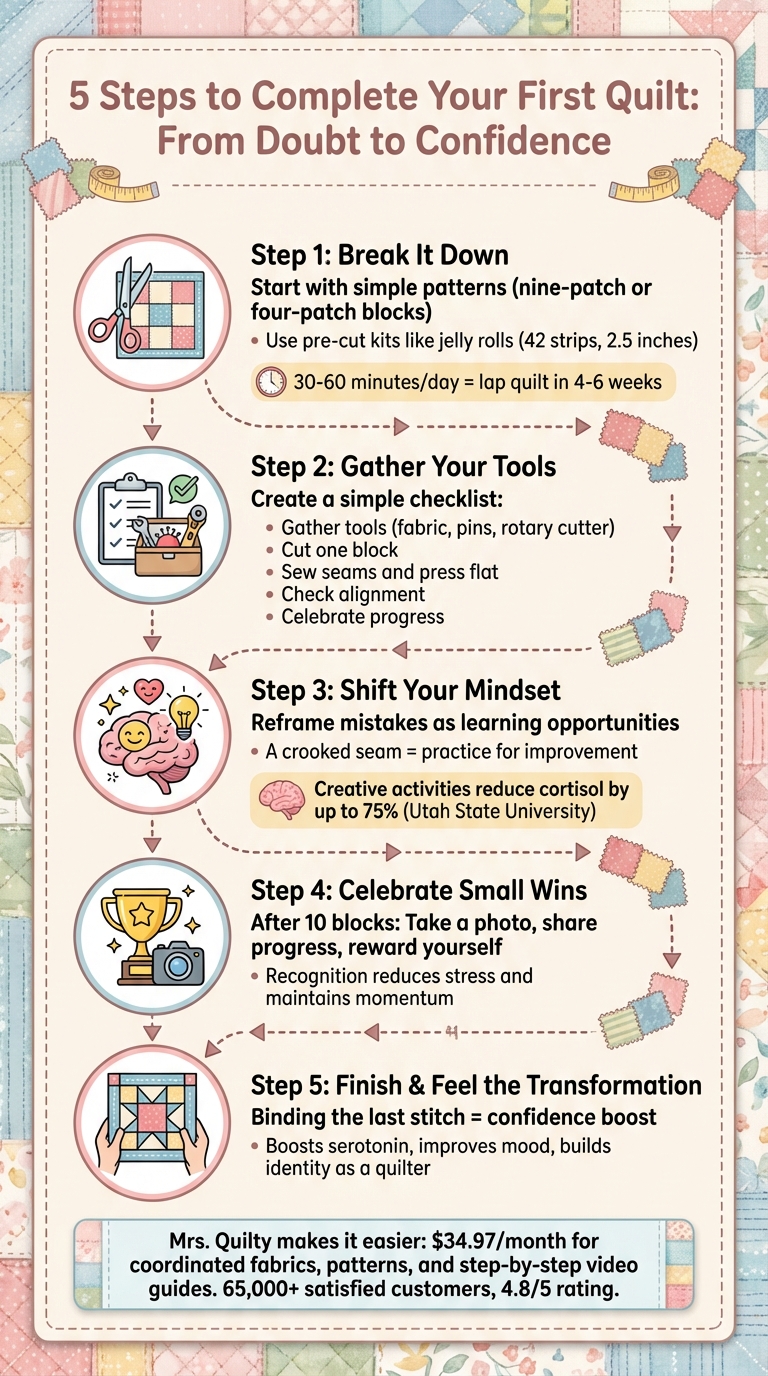
5 Steps to Complete Your First Quilt: From Doubt to Confidence
Break Your Project into Smaller Steps
Tackling a quilt project can feel overwhelming, but breaking it into smaller, manageable tasks makes the process much easier. Starting with simple patterns like nine-patch or four-patch blocks allows you to focus on basic cutting and sewing, one block at a time. Each finished block becomes a small victory, boosting your confidence and keeping you motivated. Pre-cut kits, like a jelly roll with 42 pre-cut 2.5-inch strips, are a great option to eliminate the hassle of measuring. With just 30 to 60 minutes a day, you could complete a lap quilt top in 4 to 6 weeks. Even dedicating just 1–2 hours a day can make a big difference.
Breaking the project into smaller steps not only makes it easier to manage but also helps overcome the fear of starting. This method mirrors what seasoned quilters know: achieving small milestones builds confidence and prevents burnout. With a clear plan, you’ll be ready to tackle any mental hurdles that come your way.
Getting Past Mental Blocks
Mental blocks, like perfectionism or fear of making mistakes, can stall progress. A simple checklist can help you stay on track and keep moving forward. Here’s an example:
- Gather your tools (fabric, pins, rotary cutter).
- Cut one block.
- Sew the seams and press them flat.
- Check the alignment before moving on.
- Celebrate progress, even if it’s not perfect.
Shifting your perspective on mistakes can also make a huge difference. A crooked seam isn’t a failure - it’s an opportunity to practice ripping and resewing, which improves your skills over time. Celebrate small wins to maintain momentum. For instance, after completing 10 blocks, take a photo of your progress or share it with a friend. Reward yourself with new thread or fabric. These little moments of recognition can reduce stress and keep you motivated. By taking small, deliberate steps, you’ll build confidence and create a solid foundation for success.
How Mrs. Quilty Makes Quilting Easier
Mrs. Quilty is like having a personal quilting coach delivered right to your door. The monthly subscription box includes everything you need to get started: 12 coordinated fat quarters (100% cotton), a Block of the Month project, step-by-step instructions, and a full-color quilting magazine - all for just $34.97 a month, offering over $120 in value. Pre-cut fabrics save you from the stress of measuring, and the clear instructions guide you through every step. You can even adjust the delivery schedule to fit your pace, choosing quarterly or bi-monthly options if needed.
For beginners, the 97-Piece Quilting Kit ($54.97) or 104-Piece Quilting Set ($64.97) provides all the essential tools in one convenient package. If you’d rather start small, digital PDF patterns for quick projects like tote bags, pot holders, or table runners are available for just $8.97 each. These smaller projects are perfect for building your skills before diving into a full quilt. Plus, the subscription box includes step-by-step video guides, so you can pause, rewind, and learn at your own speed.
With over 65,000 satisfied customers and a 4.8/5 rating from 2,032 reviews, Mrs. Quilty takes the guesswork out of quilting. Whether you’re a beginner or looking to refine your skills, this service simplifies the journey from hesitation to completing your first quilt.
Making Quilting Part of Your Life
Fitting Quilting into Your Schedule
You don't need to block out entire weekends to enjoy quilting. Instead, think of it as a series of short, satisfying sessions. Many quilters carve out 10–30 minutes here and there - cutting fabric after dinner, piecing blocks before heading to work, or stitching binding while catching up on a favorite show. Studies have shown that even brief creative activities like these can significantly lower stress levels.
The trick is making your quilting space ready-to-go. Set up a small, dedicated area - a corner desk, a rolling cart, or even a bin on the kitchen table - so you can dive right in without wasting time setting up. Some quilters create routines that fit their daily flow, like prepping fabric on Sunday evenings or swapping a few minutes of screen time for a calming sewing session during the week. When quilting becomes a steady part of your routine rather than something you squeeze in occasionally, it turns into a form of self-care.
Mrs. Quilty makes this even easier with tools and kits designed to fit into your life. You can adjust delivery schedules - quarterly or bi-monthly - so projects never feel overwhelming. This flexibility ensures quilting remains a joy, not another task on your to-do list. Plus, quilting isn’t just about personal relaxation - it’s also a way to connect with others through the gifts you create.
Giving Quilts to Build Relationships
A handmade quilt is more than a gift - it’s a heartfelt gesture that carries time, thought, and care. Whether it’s for a baby shower, a wedding, or a college send-off, quilts mark important milestones and create lasting memories. Research shows that quilters often give their creations altruistically, finding purpose and connection in the process. These gifts are treasured for years, deepening emotional bonds and reminding recipients of the love behind them.
For the maker, crafting a quilt with someone in mind - choosing their favorite colors, themes, or memories - can create a sense of closeness even before the gift is given. The gratitude and joy that follow can boost your own sense of fulfillment and belonging. Many quilters establish meaningful traditions: a grandmother sewing baby quilts for every grandchild, a parent sending a cozy throw when their child heads to college, or a group of friends exchanging handmade mini-quilts during the holidays. Some families even create memory quilts from cherished clothing, like baby outfits, sports jerseys, or items from a loved one who has passed. These quilts become powerful tools for processing grief and preserving family stories.
If you’re looking to try smaller, quicker projects, Mrs. Quilty offers digital PDF patterns for items like tote bags, pot holders, and table runners at just $8.97 each. These are perfect for honing your skills before diving into a full quilt gift.
Advancing Your Skills with Mrs. Quilty
As you tackle more advanced techniques - like half-square triangles or free-motion quilting - you’ll find your confidence growing with each new challenge. The process of trying, learning, and succeeding not only sharpens your skills but also reinforces your identity as a quilter. In fact, studies on quilting and mental health highlight how completing challenging projects can improve focus and boost self-esteem. Every finished quilt becomes a tangible reminder of your progress, and the compliments and gratitude you receive only strengthen your passion for the craft.
Mrs. Quilty offers the perfect tools to support this journey. Their monthly subscription box introduces new techniques and ideas through the Block of the Month project and a full-color quilting magazine. Step-by-step video guides cater to all levels, allowing you to learn at your own pace - rewind, pause, or revisit as needed. With over 65,000 happy customers and a 4.8/5 rating from 2,032 reviews, Mrs. Quilty provides the structure and community to help you grow from a beginner to a confident, skilled quilter.
FAQs
How can I stop worrying about making mistakes while quilting?
Mistakes are an inevitable part of learning, especially when it comes to quilting. Rather than dreading them, think of them as chances to improve and experiment. Starting out with beginner-friendly kits and patterns from Mrs. Quilty can make the process smoother. These kits come with straightforward instructions that walk you through each step, helping you build confidence as you go.
Quilting takes patience, regular practice, and a willingness to embrace small wins. Celebrate your progress, no matter how minor it feels. After all, every quilter begins as a beginner, and each misstep is a step closer to mastering the art!
How can I save time and stay within budget while quilting?
To keep both your time and budget in check, start by setting a spending limit that works for you and stick to the essentials - fabric bundles and basic tools are a great place to begin. Planning your projects in advance can also help you steer clear of impulse buys and unnecessary costs.
Pre-cut fabrics, like fat quarters or jelly rolls, are a smart choice to save money and cut down on prep time. Another option to simplify your quilting journey is subscribing to Mrs. Quilty's curated boxes. These handy kits include all the materials and instructions you need, making the process more convenient. Lastly, carve out specific time slots for quilting. This not only keeps you organized but also ensures steady progress without straining your budget.
How does finishing your first quilt improve mental health and build confidence?
Completing your first quilt is an experience that goes beyond the project itself - it's a milestone that can brighten your mental outlook. Quilting invites a sense of mindfulness, allowing you to set aside worries and focus entirely on the rhythm of each stitch. Watching your efforts transform into a finished piece brings a profound sense of achievement. This not only builds confidence but also motivates you to tackle future endeavors. It's a creative process that nourishes both your hands and your spirit.