
How to Choose Your First Quilt Pattern
Quilting for the first time can feel overwhelming, but choosing the right beginner-friendly pattern makes all the difference. This guide helps you select a pattern that suits your skill level and schedule, so you can start your quilting journey with confidence. From simple designs to time-saving kits, here’s everything you need to know to get started.
Why Your First Quilt Pattern Matters
Starting with a pattern that matches your abilities ensures success. Overly complex designs can lead to frustration, while simple ones help you build skills and complete your project. Look for patterns labeled "Beginner" or "Easy" that use basic shapes like squares and rectangles. Smaller projects, such as baby quilts, are ideal for learning the basics without feeling overwhelmed.
How to Evaluate Your Skills and Time
Sewing Experience:
If you’re new to sewing, stick to straightforward patterns like potholders or small quilts. For those with basic experience, try patterns introducing one new technique, like half-square triangles.
Time Commitment:
Be honest about how much time you can dedicate weekly. Smaller projects are better for limited schedules, while larger ones require more hours. Remember, quilting involves multiple steps, so plan accordingly.
Beginner-Friendly Features to Look For
- Simple Designs: Patterns like Nine-Patch and Log Cabin focus on basic shapes and straight seams.
- Avoid Complex Techniques: Skip curves, appliqué, and intricate designs until you’re more experienced.
- Pre-Cut Fabrics: Using pre-cut bundles, like fat quarters, saves time and simplifies fabric selection.
Best Starter Patterns from Mrs. Quilty
- Floral Quilt Pattern: Uses 9 fat quarters and introduces curve sewing with templates. Perfect for a throw-sized quilt.
- Grid Quilt Pattern: Focuses on straight seams and nesting, helping you master key skills.
- Block of the Month Subscription: Monthly projects with guided instructions and video tutorials to build your confidence step by step.
Get Started with Mrs. Quilty
Mrs. Quilty’s subscription box includes 12 coordinated fat quarters, beginner-friendly patterns, and video guides. For just $34.97/month, you’ll receive everything you need to complete your first quilt. Ready to start? Explore the subscription box here.
Take the first step today and enjoy the satisfaction of creating your own quilt!
Why Your First Quilt Pattern Choice Matters
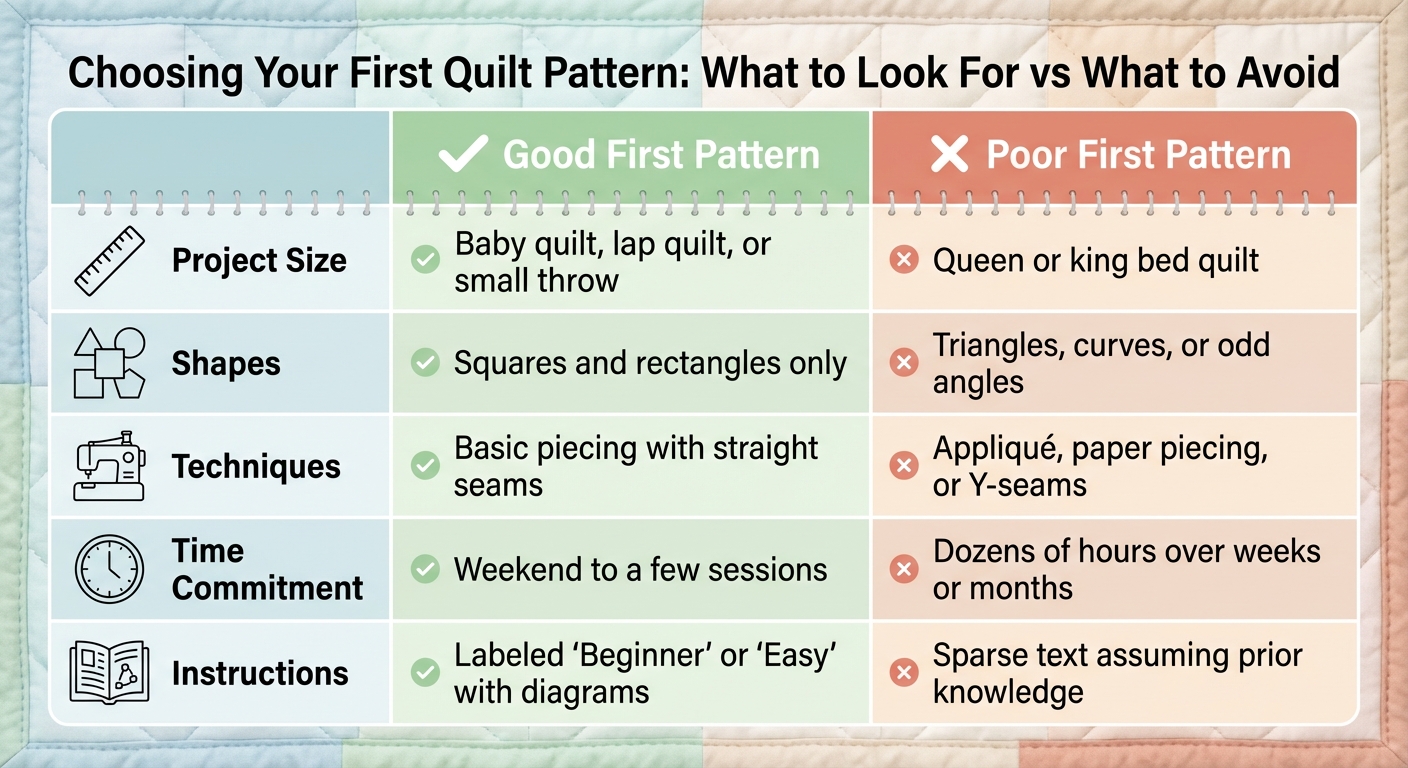
Good vs Poor First Quilt Pattern Comparison Chart
Choosing your first quilt pattern is more than just picking a design - it's the starting point of your quilting adventure. If you aim too high with a complex pattern, you might end up with an unfinished project and frustration. But if you choose a pattern that fits your skill level, you'll complete a beautiful quilt, gain valuable skills, and build the confidence to take on your next challenge. This decision lays the groundwork for your growth as a quilter and sets the tone for future projects.
The best beginner patterns match your current abilities and the time you can realistically dedicate. Look for designs that use straightforward shapes like squares and rectangles, focus on straight seams, and introduce just one or two new techniques. By starting with a small project - something you can finish in a weekend or a few short sessions - you’ll experience the entire quilting process without feeling overwhelmed. That sense of accomplishment from finishing your first quilt is often what sparks a lifelong passion for quilting.
| Aspect | Good First Pattern | Poor First Pattern |
|---|---|---|
| Project size | Baby quilt, lap quilt, or small throw | Queen or king bed quilt |
| Shapes | Squares and rectangles only | Triangles, curves, or odd angles |
| Techniques | Basic piecing with straight seams | Appliqué, paper piecing, or Y-seams |
| Time commitment | Weekend to a few sessions | Dozens of hours over weeks or months |
| Instructions | Labeled "Beginner" or "Easy" with diagrams | Sparse text assuming prior knowledge |
This table highlights why it's crucial to pick a pattern that matches your abilities and available time. Starting with a simple project helps you build skills without feeling overwhelmed. Many beginner patterns are designed to teach one or two techniques at a time, allowing you to grow your abilities step by step rather than diving into something overly complex.
Your emotional connection to the design also matters. When you choose a pattern you truly love - whether it’s a vibrant floral design or a sleek modern grid - you’ll feel more motivated to push through challenges and finish strong. Mrs. Quilty’s beginner-friendly kits are thoughtfully curated with this in mind, offering everything you need to complete your first quilt while building your confidence.
Beginner quilter Liana K. says, "Every kit is like a little push towards my goals. I started not knowing much, and now feel so accomplished after each completed quilt!"
The right first pattern can turn hesitation into confidence, setting you on a path to quilting success. Up next, we’ll explore how to assess your skill level and available time to find the ideal pattern for you.
Evaluate Your Skill Level and Available Time
Before diving into a quilting project, take a moment to assess your sewing skills and the time you can realistically commit. These two factors will determine whether your first quilt becomes a source of pride or an unfinished project gathering dust. Matching your abilities and schedule to the right techniques is the key to a satisfying experience.
Check Your Sewing Experience
Your experience with sewing plays a big role in choosing the right pattern. If you're an absolute beginner - maybe you've never touched a sewing machine or have only sewn a few straight seams - stick to patterns labeled "Beginner." These are designed to align with your skill level and keep the process manageable. Start small with projects like potholders, placemats, or baby quilts (around 36x48 inches). These smaller tasks allow you to practice essential skills like cutting fabric, sewing accurate ¼-inch seams, and mastering the basics without feeling overwhelmed. A quick tip: test your skills by sewing a ¼-inch seam on some scrap fabric to see how comfortable you feel.
For those with basic sewing experience - you’re familiar with a sewing machine and can confidently sew straight seams - consider patterns marked "Beginner" or "Confident Beginner." These patterns often introduce one new technique, such as simple borders or basic half-square triangles. Look for designs with clear diagrams, pressing instructions, and step-by-step guidance to help you along the way. Mrs. Quilty’s monthly subscription box is a great resource for this, offering easy-to-follow instructions and video tutorials that let you learn at your own speed.
Beginner quilter Diane M. shares, "Being a beginner, Mrs. Quilty has been a game-changer. The easy projects and clear instructions helped me learn so fast!"
Customer Brenda M. adds, "It's like having a personal quilting coach - right on screen!"
Choose patterns that align with your current abilities. If a design seems too advanced, opt for a simpler one to build confidence and avoid frustration.
How Much Time Can You Dedicate?
Be realistic about how much time you can set aside for quilting each week. If you only have 1–2 hours a week, focus on smaller projects or baby quilts that can be completed in short sessions. If you can dedicate 6 or more hours weekly, you might tackle larger lap quilts or simple throws. However, it’s best to steer clear of king-size quilts or intricate designs for your first attempt - they can quickly become overwhelming.
Keep in mind, quilting involves multiple steps: cutting, piecing, pressing, basting, quilting, and binding. Each stage takes time, often spread over several sessions. Patterns with triangles, for example, can take up to 50% longer than those with simple squares due to the extra precision and cutting required. To avoid underestimating the time needed, double the pattern’s suggested timeline. For instance, if a pattern claims to be a "weekend quilt", plan for two weekends if you're just starting out.
Mrs. Quilty’s subscription service is flexible enough to fit your pace. You can adjust delivery to bi-monthly or quarterly - or even skip a box - if you need extra time to finish a project. Starting small and completing your first quilt will give you the confidence to take on bigger challenges. And that sense of accomplishment? It’s what will keep you coming back for more quilting adventures.
Features of Beginner-Friendly Quilt Patterns
Choosing the right quilt pattern when you're just starting out can make all the difference. A beginner-friendly pattern can lead to a finished quilt you’ll be proud of, while the wrong one might leave you frustrated with a heap of fabric scraps. By understanding the key features of beginner patterns, you can pick projects that help you build skills without feeling overwhelmed. Let’s take a closer look at how simple designs can set you up for success.
Simple Designs and Shapes
Patterns that use basic blocks like the classic Nine-Patch or Log Cabin are perfect for beginners. These designs rely on straight lines and simple shapes - squares and rectangles - that are easy to cut and sew. With these patterns, you’ll focus on consistent ¼-inch seams and accurate cutting, which are essential skills for quilting. Once you’ve mastered one block, the repetition of creating more builds confidence and muscle memory.
Keeping the piecing process simple also means fewer errors and quicker results. For instance, a baby quilt or lap quilt with larger blocks can be completed in a short amount of time, giving you that satisfying sense of accomplishment. Mrs. Quilty’s subscription box embraces this approach with straightforward Block of the Month projects. These include clear, easy-to-follow instructions that avoid confusing jargon, making them perfect for beginners.
Skip Complex Techniques
When you’re just starting, it’s best to steer clear of patterns that include challenging techniques like curved piecing, intricate appliqué, or set-in seams. These methods require a level of precision and experience that can be frustrating for beginners. Instead, opt for patterns that introduce one new skill at a time. For example, you might start with basic borders or simple half-square triangles while continuing to practice accurate cutting and consistent seam allowances.
Mrs. Quilty’s patterns are thoughtfully designed to introduce new skills at a manageable pace. Each project focuses on building your confidence step by step, ensuring you’re not overwhelmed by too many techniques at once. By taking on projects that align with your current abilities, you’ll find the learning process enjoyable and rewarding.
Use Pre-Cut Fabrics
Pre-cut fabric bundles, like fat quarters (18x22 inches), are a great resource for beginners. They take the guesswork out of choosing coordinating fabrics and save you time on cutting, so you can dive right into sewing. Mrs. Quilty’s monthly subscription box includes 12 coordinated fat quarters made from 100% cotton, giving you a head start on your project without the stress of fabric selection.
Patterns designed for pre-cuts are especially beginner-friendly since they match standard sizes and minimize prep work. Mrs. Quilty also offers digital patterns for smaller projects like pot holders, table runners, and tote bags, which are ideal for pre-cut fabrics. These quick projects can often be completed in just a few hours, making them perfect for building confidence as you start your quilting journey.
sbb-itb-907b860
Best Mrs. Quilty Patterns for Beginners
Mrs. Quilty offers a variety of patterns perfect for beginners, combining clear instructions with easy-to-follow techniques. These designs, paired with the brand's trusted kits, take the guesswork out of quilting. Whether you're drawn to modern floral motifs, timeless grid layouts, or guided monthly projects, there's something to match your taste and skill level. Each pattern is crafted to help you build essential quilting skills while staying true to your personal style.
Floral Quilt Pattern
The Floral Quilt Pattern is perfect for beginners who want a modern, striking design without overly complicated steps. It requires just 9 fat quarters, simplifying fabric selection while delivering a polished, contemporary look. As you work on this pattern, you'll practice consistent cutting and basic piecing, repeating the same block construction to build confidence and skill.
What sets this pattern apart is its gentle introduction to curve sewing using templates. The flower design features repeated blocks, allowing you to refine your technique as you go. The finished product is a throw or lap-sized quilt - ideal for beginners since it offers a satisfying project size without becoming overwhelming.
If you're more inclined toward traditional designs, the Grid Quilt Pattern might be your next choice.
Grid Quilt Pattern
For those who appreciate classic quilting styles, the Grid Quilt Pattern is a fantastic starting point. This design focuses on simple grid blocks made with fat quarter bundles, helping you master essential skills like sewing accurate ¼-inch seams and proper fabric pressing. The repetitive nature of the grid blocks makes it easier to develop muscle memory for these fundamental techniques.
This pattern also introduces nesting seams, a crucial skill where seam allowances from adjoining blocks align perfectly to create sharp, clean intersections. Mastering this technique will make future projects much smoother. Plus, with Mrs. Quilty's pre-coordinated fat quarters, you can dive right into sewing without the hassle of choosing fabrics.
Subscription Box Block Patterns
The Block of the Month patterns included in Mrs. Quilty's subscription box offer a guided and supportive introduction to quilting. Each box comes with 12 coordinated fat quarters, a beginner-friendly pattern, straightforward instructions free of jargon, and detailed video tutorials. These videos allow you to learn at your own pace - pause, rewind, or replay whenever needed.
What makes these patterns especially beginner-friendly is their focus on one new skill at a time, ensuring you won't feel overwhelmed. The video guides are like having a personal quilting coach by your side, addressing common challenges with clear visual help. With all the materials included in the box, you can concentrate entirely on learning and creating without distractions.
Match Patterns with Mrs. Quilty Boxes and Kits
Once you’ve picked a beginner quilt pattern, it’s important to ensure it aligns with the fabrics and materials you have on hand. Matching your pattern’s requirements to the contents of your kit can save you both time and unnecessary frustration.
Match Fabric Requirements to Box Contents
Start by reviewing the fabric requirements outlined in your chosen pattern. A good quilt pattern will clearly specify what you need - whether it’s yardage, fat quarters, or pre-cuts - along with how many fabrics are required and the dimensions of the finished quilt. Mrs. Quilty’s monthly subscription box, for instance, includes 12 coordinated fat quarters made from 100% cotton. These are perfect for patterns designed with fat quarter bundles in mind. For example, the Floral Quilt Pattern only requires 9 fat quarters, making it an excellent fit for the box.
Keep in mind that while the subscription box provides the materials for the quilt top, you’ll need to purchase backing and binding fabric separately if the pattern calls for them. The pre-coordinated bundles in the box take the guesswork out of fabric selection, especially for patterns that require 2–4 coordinating fabrics. This allows you to focus on honing your sewing skills instead of worrying about matching fabrics. Additionally, consider the time commitment required for your project to ensure it fits into your schedule.
Compare Time Estimates and Skill Levels
Mrs. Quilty’s subscription box is designed with beginners in mind. It includes step-by-step instructions written in plain language, along with video guides that cater to quilters of all skill levels. When choosing a pattern to pair with your box, look for those labeled “beginner” or “easy,” especially ones that use simple shapes like squares and rectangles. Smaller projects, such as baby quilts, crib quilts, or lap-sized designs, are great options since they take less time to complete compared to full-size quilts.
The Block of the Month patterns included in Mrs. Quilty’s subscription are thoughtfully created to work with the 12 fat quarters provided. These patterns come with clear time estimates and follow a guided monthly format. Each project introduces one new skill at a time, helping you build confidence without feeling overwhelmed.
Conclusion
Starting your quilting journey can be simple and enjoyable. By focusing on beginner-friendly patterns that use basic shapes and pre-cut fabrics, you’ll gain confidence while learning essential techniques. Mrs. Quilty’s curated kits take the guesswork out of fabric selection, providing everything you need in one ready-to-use package. This thoughtful approach ensures a smooth and guided experience, helping you build skills step by step.
With over 65,000 satisfied quilters and a 4.8/5 rating from more than 2,000 reviews, Mrs. Quilty has proven to be a trusted companion for beginners discovering the joy of quilting.
The subscription box includes all the materials and instructions needed to tackle your first project. Whether you’re drawn to the Floral Quilt Pattern, the Grid Quilt Pattern, or a Block of the Month project, you’ll have everything required to create something beautiful while building your skills.
Get started today with Mrs. Quilty's subscription box for just $34.97/month, delivering over $120 worth of materials straight to your door. By choosing a pattern that matches your abilities and schedule, you’ll set yourself up for success. Ready to begin? Check out the subscription box here.
FAQs
What should I look for in a quilt pattern as a beginner?
When you're just getting started, choose quilt patterns that are easy to follow and beginner-friendly. Look for designs featuring basic shapes like squares and rectangles, as these are simpler to piece together. Patterns with clear, step-by-step instructions and uncomplicated color schemes are ideal, helping you focus on learning without feeling overwhelmed. Starting with smaller, more manageable projects is also a great way to build confidence as you develop your skills. Mrs. Quilty offers patterns specifically designed for beginners, making it simple to create lovely quilts while mastering the essentials.
How do I figure out my quilting skill level and find time to quilt?
To gauge your quilting skill level, start with beginner-friendly patterns and tools from Mrs. Quilty. These easy projects are perfect for building confidence and getting comfortable with the basics.
Think about how much time you can dedicate to quilting and set achievable goals. Smaller projects, like placemats or baby quilts, are ideal for fitting into a busy schedule. Mrs. Quilty’s step-by-step video guides and tutorials make it easy to learn at your own speed, keeping the process enjoyable and stress-free.
What makes Mrs. Quilty's subscription box perfect for beginners?
Mrs. Quilty's subscription box is perfect for those new to quilting, providing all the essentials to help you get started. Inside each box, you'll find premium materials, simple patterns, and clear, step-by-step tutorials specifically created for beginners. To add a little extra joy, the box also includes surprise gifts to enhance your quilting journey. With a flexible and commitment-free plan, you can develop your skills and explore your creativity without pressure.