

Top 7 Ergonomic Tools for Free-Motion Quilting
Free-motion quilting is rewarding, but long hours at your machine can strain your body. Ergonomic tools help you quilt comfortably while reducing hand fatigue, back pain, and eye strain. This guide covers seven tools that improve your setup, from quilting gloves to lumbar cushions. Whether you're a beginner or experienced quilter, these solutions make quilting easier and more enjoyable.
Highlights:
- Quilting gloves: Reduce hand fatigue and improve fabric control.
- Supreme Slider mats: Create a smooth surface for easier fabric movement.
- Lumbar cushions: Support your back and improve posture.
- Magnifiers: Reduce eye strain and improve stitching precision.
These tools can transform your quilting experience, helping you focus on your craft without discomfort.
Quilting Ergonomics - How to Be Comfortable While You Quilt or Sew
1. Ergonomic Quilting Gloves
Ergonomic quilting gloves are a must-have for quilters looking to reduce hand and arm fatigue during free-motion quilting. These gloves are designed with textured surfaces or grip-enhancing materials that allow fabric to glide smoothly without requiring excessive hand strength. By reducing the need for a tight grip, they help alleviate tension in your hands, arms, and shoulders, making quilting sessions more comfortable and efficient.
Reduces Physical Strain
One of the biggest benefits of ergonomic gloves is their ability to minimize physical strain. Traditional quilting methods often require a firm grip on the fabric, which can lead to fatigue or even repetitive strain injuries over time. Ergonomic gloves solve this issue by providing excellent traction, so you can guide the fabric with ease and less effort.
For example, the Dritz Fons & Porter Machine Quilting Gloves are a popular choice among quilters. With a 4.7/5 star rating on Amazon and over 2,000 reviews, many users highlight how these gloves significantly reduce hand fatigue, even during long quilting sessions. Quilters often note that they can work for hours without experiencing the cramping or soreness they used to face.
Improves Precision and Control During Quilting
The textured fingertips and palms of ergonomic gloves give quilters better control over their fabric layers. This added stability is especially helpful when working on intricate designs, where precision is key.
With improved grip and control, achieving smooth curves, sharp points, and detailed geometric patterns becomes much easier. The result? Cleaner, more professional-looking quilts that reflect the effort and skill you’ve put into your work.
Compatibility with Quilting Setups
Ergonomic quilting gloves are versatile and work well with all types of quilting setups, whether you’re using a domestic or longarm machine. They won’t interfere with other tools like quilting mats or paddles, making them a seamless addition to your workspace. Whether you’re quilting at home, in a studio, or at a retreat, these gloves are designed to suit any flat quilting surface.
Comfort-Enhancing Features
Modern quilting gloves are designed with comfort in mind. Many feature lightweight, breathable materials that keep your hands cool and flexible during extended sessions. Look for options with open fingertips, cushioned palms, and silicone dots for added grip - these features make a noticeable difference in both comfort and performance.
In the United States, most high-quality ergonomic quilting gloves are priced between $8 and $15 per pair as of 2025. If you’re looking for a curated selection of quilting gloves and other ergonomic tools, check out Mrs. Quilty, where you’ll find options tailored to enhance your quilting experience.
2. Supreme Slider or Free-Motion Quilting Mat
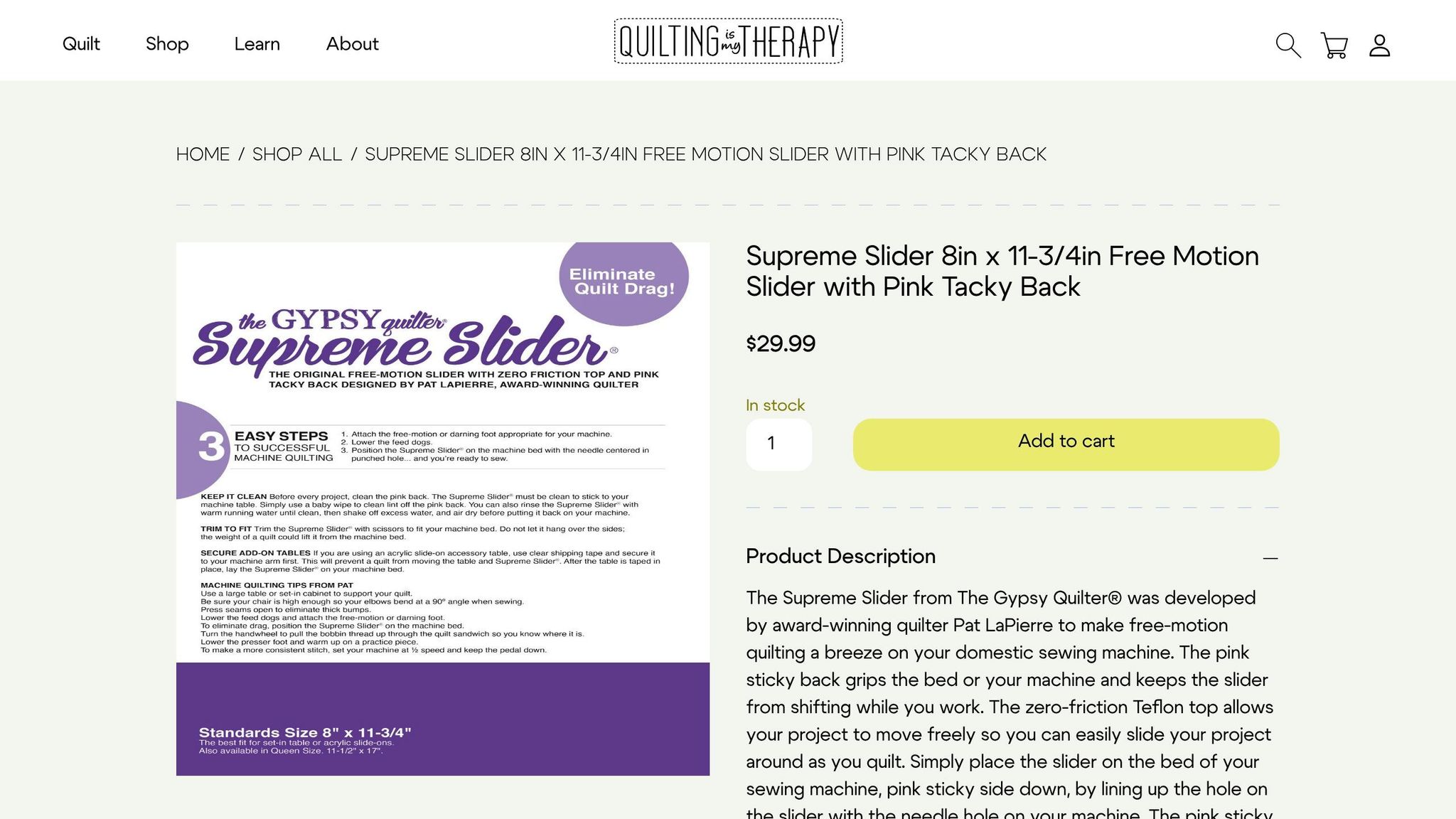
A Supreme Slider or free-motion quilting mat transforms your sewing table into a smooth, frictionless surface, allowing your quilt sandwich to glide effortlessly. These mats are crafted from low-friction materials that minimize drag, so you can focus on perfecting your quilting designs instead of wrestling with sticky table surfaces.
Reduces Physical Strain
By creating a friction-free surface, these mats reduce the effort needed to move your quilt. This helps ease strain on your arms and shoulders, especially during long quilting sessions.
Enhances Precision and Control
A free-motion quilting mat gives you greater control over your quilt's movement. The smooth, consistent surface allows for fluid motion in every direction, making it easier to achieve even stitches and maintain consistent spacing. Whether you're working on sharp angles, gentle curves, or intricate feathered patterns, the mat's predictable glide helps you make precise adjustments for professional-looking results.
Fits a Variety of Quilting Setups
These mats come in a range of sizes to fit different workspaces. Installation is simple - most mats just lay flat on your table without requiring adhesives or permanent fixtures.
Designed for Comfort and Durability
Modern quilting mats often include thoughtful design features to enhance comfort. Many have a slightly cushioned backing that provides a soft surface for your arms, while rounded or beveled edges prevent wrist and forearm discomfort. High-quality mats are built to maintain their smooth surface over time and are easy to clean with a damp cloth. Some even include printed grids to help with spacing and alignment. Premium options are available at competitive prices, offering a range of features to suit your needs. For a curated selection of quilting mats and ergonomic tools to elevate your free-motion quilting experience, visit Mrs. Quilty.
3. Ergonomic Quilting Rings and Hoops
Today’s quilting rings and hoops are designed with comfort and efficiency in mind. With features like cushioned grips, lightweight materials, and clever closures, they help maintain fabric tension without requiring a tight grip.
Reduces Physical Strain
These tools are crafted to ease the physical demands of quilting. Padded grips spread out pressure evenly, helping to reduce hand fatigue and cramping. Materials like soft-touch rubber or foam, paired with lightweight designs and spring-loaded tension systems, mean you don’t have to strain your wrists or forearms during long quilting sessions.
Improves Precision and Control During Quilting
Textured, non-slip grips keep fabric securely in place, giving you better control over needle placement. This translates to smoother, more consistent stitches - perfect for achieving polished, professional-looking results.
Comfort-Enhancing Features
Extended quilting sessions can be tough on your hands, but these hoops are built for comfort. Breathable, moisture-wicking materials and perforated grips keep your hands cool and dry. Contoured shapes ease pressure on knuckles and thumbs, while quick-release mechanisms make it easy to adjust or reposition fabric as needed.
For high-quality ergonomic hoops and quilting tools, check out Mrs. Quilty. They’re designed to make quilting more comfortable and enjoyable.
4. Free-Motion Quilting Paddles
Free-motion quilting paddles are handy tools designed to make quilting smoother and less tiring. These flat, easy-to-hold tools help guide fabric under your needle without the need to grip it directly, giving you better control and reducing hand strain during extended quilting sessions. Let’s dive into how these paddles can make your quilting experience more comfortable and precise.
Reducing Physical Strain
One of the standout benefits of quilting paddles is how they ease physical strain. By spreading pressure evenly across your palm and keeping your wrist in a neutral position, they help prevent cramping and repetitive strain injuries. Instead of relying on the smaller muscles in your hands, you’ll engage the larger muscles in your arms and shoulders, making the process much more comfortable.
Boosting Precision and Control
The flat surface of these paddles allows fabric to glide effortlessly, helping you achieve consistent stitch lengths and precise design details. You can change directions smoothly without needing to stop or readjust your grip, keeping your stitching rhythm steady.
Many paddles also feature textured surfaces that strike a balance between grip and glide. This ensures your fabric stays in place while still allowing for smooth movement, resulting in evenly spaced stitches and polished designs.
Compatibility with Various Quilting Setups
Free-motion quilting paddles are versatile tools that work well with most sewing setups. Whether you’re using a standard domestic sewing machine or a longarm quilting machine, these paddles fit right in. Pairing them with accessories like a free-motion quilting mat or a supreme slider creates a super-smooth surface, enhancing your control even further.
Their slim design avoids interfering with your machine and pairs nicely with adjustable sewing tables, ensuring your arms are positioned comfortably. Plus, they’re lightweight, so whether you prefer quilting while sitting or standing, they’re easy to use for extended periods.
Features That Enhance Comfort
Quilting paddles are thoughtfully designed with features that prioritize comfort. Contoured edges and perforated surfaces help reduce pressure points and keep your hands cool, even during marathon quilting sessions.
Some paddles include slightly raised edges or built-in finger guides, which allow you to maintain a secure grip without needing to squeeze tightly. This ergonomic design minimizes hand fatigue, letting you focus on your creativity rather than discomfort.
These paddles fit seamlessly into any free-motion quilting setup, making them an essential tool for quilters looking to combine comfort with precision.
sbb-itb-907b860
5. Adjustable Lumbar Support Cushion
Long quilting sessions can take a toll on your lower back. An adjustable lumbar support cushion transforms your quilting chair into an ergonomic haven, helping you maintain good posture and stay comfortable during those marathon free-motion quilting projects. Designed to blend seamlessly with your quilting setup, it promotes better posture while supporting your creative flow.
Reduces Physical Strain
A well-chosen lumbar support cushion aligns with the natural curve of your spine, reducing the tendency to slouch. Materials like viscoelastic memory foam or Poly-Fil® Micro Beads mold to your body, relieving pressure points while providing steady support - even when you're leaning forward to perfect your stitching. Many cushions also feature an open-cell structure, which enhances airflow to keep you cool and comfortable.
Works with Your Quilting Setup
Most adjustable lumbar cushions come with straps or buckles, making it easy to secure them to nearly any quilting chair. This adaptability ensures you can enjoy consistent back support whether you're working at your regular quilting station or moving to a spot with better light. They also pair well with height-adjustable sewing tables, supporting the forward-leaning posture often needed for free-motion quilting without disrupting your arm movements or machine access.
Built for Comfort and Convenience
Modern lumbar cushions are designed with features that cater to quilters who spend hours at their machines. Covers made from polyester faux suede create a soft, breathable surface that helps prevent discomfort caused by sweating. Many cushions come with removable, machine-washable covers, making it easy to keep them free of fabric dust and stray threads. Durable fabrics ensure the cushion holds up to daily use.
Thanks to their lightweight and portable design, these cushions are easy to move between chairs or take along to quilting retreats and classes. This ensures you can maintain proper back support no matter where your quilting adventures take you.
For a handpicked selection of ergonomic tools tailored to quilters, visit Mrs. Quilty and find the perfect additions to your free-motion quilting setup.
6. Ergonomic Seam Ripper
Even the most experienced quilters occasionally need to remove stitches, but traditional seam rippers can be tough on your hands and wrists. Ergonomic seam rippers, with their cushioned handles and balanced design, make this task much more comfortable. They’re an essential part of any ergonomic quilting toolkit, helping both with corrections and creative adjustments.
Reduces Physical Strain
Ergonomic seam rippers are designed to ease the strain on your hands. Their cushioned, contoured handles require less grip strength, while the balanced weight reduces cramping and tension in your fingers and wrists. This thoughtful design can even help lower the risk of conditions like carpal tunnel syndrome or tendonitis . For quilters with arthritis or limited hand strength, the larger handles provide better leverage, making them easier to use for extended periods. These tools fit seamlessly into the broader set of ergonomic aids that can elevate your free-motion quilting setup.
Improves Precision and Control During Quilting
The improved grip of ergonomic seam rippers offers better control, allowing you to remove stitches with precision while protecting your fabric. Non-slip, comfortable handles ensure the tool stays steady in your hand, giving you the dexterity needed for intricate tasks. This level of precision is especially important when working with detailed quilting patterns, where you need to remove specific stitches without disturbing the surrounding work.
Comfort-Enhancing Features
Popular models, like the Dritz Ergonomic Large Seam Ripper, set the bar high with their cushioned handles that fit naturally in your hand. If you prefer a more natural touch, handmade wooden seam rippers provide smooth, hand-shaped designs that combine comfort with aesthetic charm. Many options also feature soft, non-slip grips, ensuring the tool stays secure with minimal effort, so your hand stays relaxed - even during long seam-ripping sessions.
Paired with ergonomic gloves, mats, and other tools, a well-designed seam ripper can transform your entire quilting experience. For a selection of high-quality ergonomic quilting tools that prioritize comfort and precision, check out the offerings at Mrs. Quilty.
7. Magnifier Accessory for Sewing Machines
Struggling to see fine details while quilting can leave you squinting, leaning forward, and eventually straining your neck and eyes. Magnifier accessories are designed to solve this problem by clipping onto your sewing machine or workspace, offering hands-free magnification. They bring your work into sharp focus while helping you maintain good posture, making long quilting sessions much more comfortable.
Reduces Physical Strain
By enlarging your stitching area, magnifier accessories help reduce eye strain and ease tension in your neck and shoulders caused by hunching over your work. With less fatigue, you can quilt for longer periods without dealing with headaches or dry eyes.
Many of these tools also feature adjustable LED lights that provide even illumination and reduce shadows. The combination of magnification and proper lighting helps alleviate strain on your entire upper body - from your eyes to your shoulders and back.
Improves Precision and Control
Magnification gives you a clearer view of individual threads, which is especially helpful when working with dark fabrics, intricate patterns, or thread colors that closely match your material. This sharper focus allows for precise needle placement, consistent stitch length, and greater confidence when tackling detailed quilting designs.
Works with Various Quilting Setups
Magnifier accessories are designed to fit seamlessly into your quilting space. They attach easily using adjustable clamps or magnetic bases and often feature flexible arms for positioning exactly where you need them. Many models can fold flat or swing out of the way, making them ideal for smaller workspaces. Whether you're piecing fabric at your machine or quilting at a separate table, these tools adapt to your setup and enhance your workflow.
Comfort-Focused Features
In addition to reducing strain and improving precision, modern magnifiers come with features that enhance comfort. They typically offer multiple magnification levels (ranging from 2× to 5×) and built-in LED lights with adjustable brightness. The hands-free design allows you to find the perfect angle without twisting your neck, while the wide field of view minimizes the need for constant repositioning.
Magnifier accessories are an essential part of creating a comfortable and efficient free-motion quilting setup. To find the right one for your needs, check out the curated options available at Mrs. Quilty.
Tool Comparison Chart
To complement the detailed reviews above, this chart provides a handy reference to help you choose tools that suit your free-motion quilting needs. When selecting, prioritize ergonomic features that align with your quilting style, budget, and comfort preferences. Below, you'll find a summary of each tool's key advantages and features to streamline your decision-making.
| Tool | Primary Ergonomic Benefits | Key Features | Compatibility | Price Range |
|---|---|---|---|---|
| Ergonomic Quilting Gloves | Reduces hand fatigue and prevents calluses, improves fabric grip | Fingerless design, non-slip palm, breathable materials | Fits most hand sizes | $15 - $35 |
| Supreme Slider/Free-Motion Mat | Prevents fabric drag, eases shoulder strain | Low-friction surface, easy to clean, available in multiple sizes | Works with most sewing machine tables and extensions | $25 - $60 |
| Ergonomic Quilting Rings/Hoops | Promotes proper wrist alignment, lightweight for easy handling | Contoured grips, balanced weight, various sizes | Compatible with hand quilting and some machine techniques | $20 - $80 |
| Free-Motion Quilting Paddles | Encourages natural hand positioning, enhances fabric control, reduces wrist strain | Smooth ergonomic handles, compact for storage | Ideal for domestic free-motion quilting | $30 - $70 |
| Adjustable Lumbar Support Cushion | Supports lower back, improves posture, alleviates back pain | Memory foam construction, adjustable straps, breathable covers | Fits most chairs used in quilting spaces | $40 - $120 |
| Ergonomic Seam Ripper | Provides a comfortable grip, precise control, reduces hand cramping | Cushioned handles, sharp tips, safety caps | Universal for quilting and sewing tasks | $12 - $28 |
| Magnifier Accessory | Reduces eye strain, improves posture, prevents neck hunching | LED lighting, adjustable magnification (2x-5x), flexible positioning | Attaches to most sewing machines and tables | $45 - $150 |
These tools can be grouped into three functional categories:
- Comfort-focused tools: Items like quilting gloves and lumbar cushions are designed to alleviate common quilting discomforts, making them ideal for quilters of all skill levels.
- Precision tools: Magnifiers and ergonomic seam rippers help refine your work while minimizing physical strain during detailed tasks.
- Movement tools: Sliders, paddles, and specialized hoops address the physical challenges of fabric movement in free-motion quilting.
For those on a budget, options like quilting gloves or ergonomic seam rippers under $35 can provide excellent value. On the other hand, investing in premium items like lumbar cushions or LED magnifiers can deliver longer-term comfort and efficiency. Many quilters find that combining tools creates a more holistic ergonomic setup. For instance, pairing quilting gloves with a supreme slider can tackle both hand comfort and fabric movement, while adding a lumbar cushion completes the setup for optimal comfort.
You can explore a variety of these ergonomic quilting tools at Mrs. Quilty, where quality meets comfort to elevate your quilting experience.
Conclusion
Using ergonomic tools can make free-motion quilting not only more comfortable but also more enjoyable. These seven tools are designed to tackle common physical challenges like hand fatigue, wrist strain, back pain, and eye strain. By addressing these issues, they allow you to quilt longer while staying comfortable and maintaining your technique.
Starting with simple, affordable options - like quilting gloves or an ergonomic seam ripper - can provide quick relief. Over time, you can expand your setup with items like a lumbar support cushion or a magnifier accessory for more comprehensive comfort. This step-by-step approach lets you build an ergonomic workspace that evolves with your needs.
Many quilters find that combining tools enhances their overall effectiveness. For example, pairing quilting gloves with a supreme slider not only improves grip but also makes fabric movement smoother, creating an ideal quilting setup. By adopting this well-rounded approach, you can reduce the risk of repetitive strain injuries and keep your creativity flowing uninterrupted.
FAQs
How do ergonomic quilting gloves help prevent hand fatigue during long quilting sessions?
Ergonomic quilting gloves are crafted to ease hand fatigue by offering a snug, comfortable fit that supports your hands during long quilting sessions. They improve your grip on fabric, making it simpler to control and guide your quilt without overworking your muscles. These gloves also help spread pressure more evenly, which reduces tension and allows you to quilt longer with less strain.
For those who spend hours at their quilting machines, these gloves can make a noticeable difference, ensuring both precision and comfort as you work on your creative projects.
What should I look for in a magnifier to reduce eye strain while quilting?
When selecting a magnifier for quilting, focus on features that improve both comfort and visibility. Choose one with adjustable lenses so you can fine-tune the focus to suit your needs. A magnifier with built-in lighting is a great choice, as it provides better illumination for intricate details. An ergonomic design is also essential, ensuring it remains comfortable to use during long quilting sessions. Look for distortion-free optics and aim for a magnification range of 1.4x to 3x, which works well for detailed quilting tasks. These features can help reduce eye strain and make your quilting time more enjoyable.
Are the ergonomic tools mentioned in the article compatible with both domestic and longarm quilting machines?
Yes, most ergonomic quilting tools are made to work well with both domestic and longarm quilting machines. These tools are designed to improve comfort and minimize strain, no matter what type of machine you use. Be sure to review the tool's specifications to confirm it’s compatible with your machine.
Related Blog Posts
- Quilting Subscription Box: What to Expect Inside
- Quilting Terms Every Beginner Should Know
- Ultimate Guide to Fabric Preparation for Quilting
- Hand Quilting vs. Machine Quilting: Key Differences