

Why Quilting Is the Ultimate Anti-Anxiety Hobby
Quilting is more than just stitching fabric - it’s a calming activity that helps reduce anxiety and boost mental well-being. With the pressures of modern life, many people are turning to hands-on hobbies like quilting for relief. By focusing on repetitive motions and creative designs, quilting engages the mind and body, helping to lower stress and improve mood.
This article dives into how quilting can ease anxiety, the science behind its soothing effects, and how to start quilting with beginner-friendly kits. Whether you’re looking for a relaxing escape or a way to connect with others, quilting offers a fulfilling way to unwind. Let’s explore why this timeless craft has become a go-to for mental health support.
How Quilting Helps Reduce Anxiety
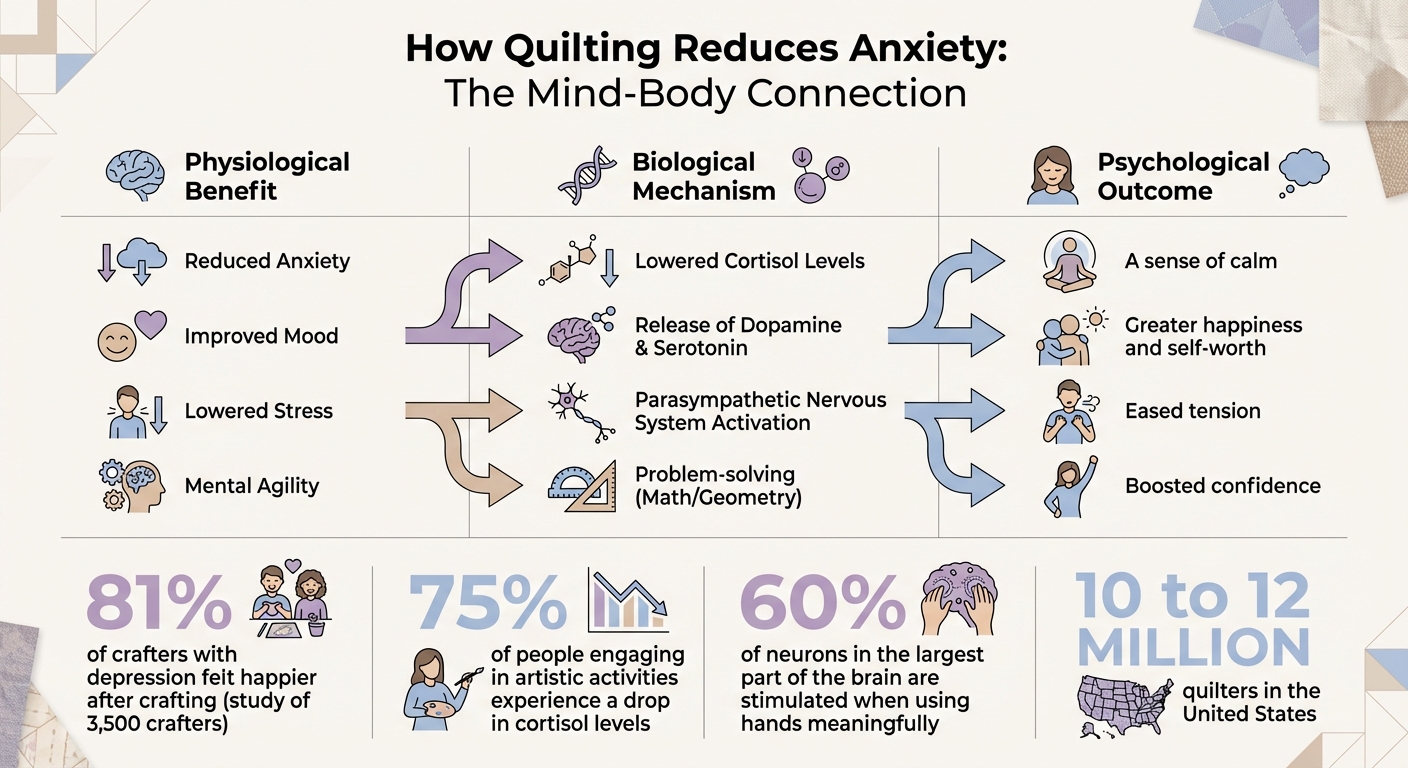
How Quilting Reduces Anxiety: Physiological and Psychological Benefits
Quilting offers a soothing escape from stress by engaging your hands, calming your mind, and channeling your creativity into something tangible.
How Repetitive Motions Calm the Nervous System
The repetitive nature of quilting - cutting fabric, piecing blocks, and stitching seams - has a grounding effect on the body. These actions activate the parasympathetic nervous system, which helps counteract the "fight or flight" response that often fuels anxiety. Occupational therapist Victoria Schindler explains:
The repetitive motion of crafts like quilting activates our parasympathetic nervous system. This, in turn, calms our body's instinct to fight or flight.
Beyond the physical motions, quilting requires focus. Measuring, cutting, and matching seams demand your attention, leaving little room for anxious thoughts. Dr. Alton Barron, co-author of The Creativity Cure, highlights the neurological benefits:
When you use your hands meaningfully - by sewing, knitting or sculpting - you stimulate 60 percent of the neurons in the largest part of your brain, which releases dopamine... Plus, engaging these neurons lowers levels of cortisol to tamp down anxiety.
Here’s a quick look at how quilting impacts both body and mind:
| Physiological Benefit | Biological Mechanism | Psychological Outcome |
|---|---|---|
| Reduced Anxiety | Lowered Cortisol Levels | A sense of calm |
| Improved Mood | Release of Dopamine & Serotonin | Greater happiness and self-worth |
| Lowered Stress | Parasympathetic Nervous System Activation | Eased tension |
| Mental Agility | Problem-solving (Math/Geometry) | Boosted confidence |
These benefits often lead to a meditative state of focus and relaxation, enhancing overall well-being.
Getting Into Flow While Quilting
The repetitive rhythm of quilting can pull you into a "flow state", a mental state where time seems to disappear, and you become completely absorbed in the task at hand. Florence Knapp, a quilter and blogger, describes it beautifully:
Quilting's rhythm slows your pace and sharpens focus, creating a meditative flow.
In this state, everyday worries fade into the background. Instead of dwelling on deadlines or past conflicts, your mind zeroes in on the craft - whether it’s aligning fabric corners or choosing the next design element or quilting technique. A study of 3,500 crafters revealed that 81% of participants with depression felt happier after engaging in their craft. This sense of accomplishment, paired with the tactile nature of quilting, creates what researchers call an "effort-based reward." Unlike passive activities like scrolling through social media, quilting feels productive, which can ease feelings of guilt or uselessness often linked to anxiety and depression.
Staying Present Through Fabric and Design
Quilting also encourages mindfulness. Selecting fabrics, testing color combinations, and focusing on intricate patterns naturally bring you into the present moment. The simple act of running your fingers over cotton prints can ground you in the physical world, offering a much-needed break from the distractions of screens and multitasking. Decisions like pairing a floral print with a geometric design demand your full attention, helping to quiet the mental noise. Bright and cheerful colors, often used in quilting, can also lift your mood. Writer Kathryn Vercillo sums it up perfectly:
The more you slow down and work with your hands, the quieter the noise in your head. The less you ruminate, and the less you allow for distractions, the easier it will be to know your own true self.
Interestingly, research has shown that participants in art-making groups experienced better mood improvements and immune responses compared to those practicing meditation or expressive writing. The secret lies in fully embracing the process - enjoying each step rather than rushing to finish.
Finding Support in Quilting Communities
Quilting isn’t just a solo activity; it’s a gateway to connection. Joining quilting guilds, attending workshops, or participating in online circles can help you build meaningful relationships. With an estimated 10 to 12 million quilters in the United States, it’s easy to find others who share your passion. A study involving 29 quilting group members found that social interactions were among the most impactful elements for improving well-being. Quilt designer Caroline Fairbanks-Critchfield describes this sense of camaraderie:
I know wherever I find another quilter, I find a friend.
Shared interests make it easier to connect, especially for those who struggle with social anxiety. Conversations about fabric and patterns serve as natural icebreakers, helping to build friendships. Many quilters also find purpose by creating pieces for charities, veterans, or those in need. This altruistic side of quilting not only strengthens community bonds but also provides a sense of fulfillment. Group settings further offer encouragement and validation, inspiring quilters to learn new skills and grow their confidence.
sbb-itb-907b860
What Studies and Quilters Say About Mental Health Benefits
Quilting isn't just a hobby - it’s a lifeline for mental well-being, backed by research and heartfelt personal accounts.
Research on Creative Hobbies and Stress
Science has consistently shown that creative activities like quilting can significantly reduce stress and anxiety. In March 2015, Dr. Ann Collier from Northern Arizona University conducted a fascinating experiment involving women aged 18 to 77. Participants first recalled a stressful event and then engaged in one of three activities: expressive writing, meditation, or art-making (which included textile crafts). The results? The art-making group experienced the most noticeable improvements in mood and even showed better inflammatory immune responses compared to the other groups.
Additionally, studies reveal that 75% of people who engage in artistic activities experience a drop in cortisol levels, the hormone associated with stress. Kelly Lambert, Ph.D., explains that creative tasks stimulate the release of serotonin and dopamine - chemicals that enhance mood and boost self-esteem. These neurochemical reactions lay the groundwork for quilting’s powerful effect on mental health.
Mental Health Benefits Specific to Quilting
Quilting stands out among creative pursuits for its unique combination of challenges and rewards. A study conducted between February and June 2010 by researchers Emily L. Burt and Jacqueline Atkinson explored this in depth. Through 29 interviews with members of a Glasgow quilting group, they uncovered how quilting’s cognitive demands and social interactions, like "Show and Tell" sessions, significantly boosted participants' self-esteem and sense of achievement. The findings were published in the Journal of Public Health in 2011.
Quilting’s mental benefits go beyond the surface. Skills like measuring dimensions, designing intricate patterns, and solving creative problems keep the mind sharp. Dr. Ann Collier points out:
You're so engrossed in what you are doing, you can't remember what bothered you and then you feel refreshed when you go back to the rest of your life.
This mental engagement provides a welcome escape from everyday stress, offering both relaxation and a sense of accomplishment.
Stories from Quilters Who Found Relief
The science mirrors the experiences of countless quilters who’ve found solace in their craft. Take Carol Ann Ferrari-Rogers from Coral Springs, Florida, for example. After losing her 18-year-old daughter in a car accident, she faced overwhelming anxiety, depression, and panic attacks. Quilting became her anchor. By immersing herself in the meditative rhythm of quilting, she found relief from emotional pain and even reduced her reliance on medication. She later founded CozinessQuilts.com and became president of her local quilt guild. As she describes it:
While quilting, I am in my meditative, happy place. I'm able to see my life more clearly - to focus on all that is good.
Beyond personal healing, quilting often brings a sense of purpose through giving. Many quilters donate their creations to organizations like Project Linus, which provides handmade blankets to children facing trauma or serious illness. This act of generosity not only uplifts recipients but also enriches the emotional well-being of the quilters themselves. By combining personal growth with community impact, quilting becomes a powerful tool for mental health.
Getting Started with Quilting Using Mrs. Quilty
Quilting can be a soothing and rewarding hobby, and it's surprisingly simple to begin. The secret lies in starting with projects and supplies that help you feel confident right from the start.
Simple First Projects for Nervous Beginners
Begin with small, manageable projects that let you learn the basics without feeling overwhelmed. Mug rugs (about 5" x 7") are an excellent starting point. They're quick to complete - often in just a few hours - and teach essential skills like cutting, piecing, and binding. If you're looking for something slightly larger, try a table runner (approximately 16.5" x 79.5"). These are still easy to handle but give you a finished product that feels substantial and satisfying.
When you're ready to tackle your first quilt, opt for a crib-size or baby quilt (40" x 40" to 45" x 45"). These smaller dimensions are ideal for a standard home sewing machine, making the process more manageable. Suzy Williams, the founder of Suzy Quilts, suggests starting with a Rail Fence pattern:
A Rail Fence pattern is the perfect first quilt for a newbie... with only straight cuts and straight seams, you will finish this project feeling accomplished and happy with your quick success!
Once you've chosen your project, simplify the process further by using beginner-friendly kits and supplies from Mrs. Quilty.
Beginner-Friendly Kits and Supplies
Mrs. Quilty offers beginner kits that make getting started stress-free. Each kit includes pre-selected, coordinating fabrics, clear step-by-step instructions, and all the materials you'll need in one convenient package. This takes the guesswork out of choosing fabrics and patterns, helping you focus on learning.
For even less prep time, consider pre-cut fabric bundles. Options like charm packs (5" squares), layer cakes (10" squares), and jelly rolls (2.5" strips) save you from cutting and ensure your fabrics will look great together. If you're ready to follow a specific project, you can purchase digital patterns for $6.98 to $15.00, which provide instant downloads and clear instructions.
For ongoing inspiration, the Mrs. Quilty Subscription Box ($34.97/month) is a fantastic option. Each box is packed with premium fabrics, exclusive patterns, tutorials, and even a magazine - offering over $120 worth of value every month.
Once you've gathered your supplies, setting up a dedicated quilting space can help you stay focused and relaxed.
Setting Up Your Quilting Space
A well-organized workspace can make quilting even more enjoyable. You don’t need a large area - just a small corner with your sewing machine, good lighting, and your tools within easy reach. Keep the room comfortable, ideally between 50°F and 60°F with about 50% humidity, to protect both your fabrics and your machine.
Staying organized reduces stress. Affordable storage solutions can keep your workspace tidy and efficient. Consider items like a Bobbins Tower Storage Stand, Thread Storage Box, or Quilting Tools Organizer to keep everything in its place. An Acrylic Ruler Stand (starting at $24.97) makes it easy to store and access your rulers, while Hanging Quilting Storage Shelves ($29.97) help you maximize vertical space for fabric bundles and kits. Be sure to cover your sewing machine when it’s not in use to keep it dust-free and ready for your next project.
With the right tools, space, and mindset, quilting can become your go-to activity for relaxation and creativity.
Making Quilting a Regular Habit
Quilting consistently can turn a simple pastime into a powerful way to ease stress and support your mental well-being.
Building a Relaxing Quilting Routine
A soothing quilting routine often pairs the craft with other calming activities. Try stitching while listening to soft music, your favorite podcast, or even practicing deep breathing. These small additions can amplify the meditative quality of quilting. Dr. Randy Cupps from South Denver Cardiology shares:
When you focus on something that is not work-related, you give your mind something else to focus on that you find to be fun and enjoyable. As a result, your blood pressure and hypertension lowers.
Instead of long, exhausting sewing sessions, aim for 15–30 minutes of focused quilting. These shorter bursts are easier to fit into a busy day and let you enjoy the process without feeling overwhelmed. Before wrapping up, set out your next piece of fabric or block so you're ready to dive in when you return.
As you build this habit, challenge yourself gradually by exploring new techniques and patterns.
Growing Your Skills at Your Own Speed
Start with simple projects that boost your confidence, like three-yard quilt patterns or basic patchwork blocks. Each finished piece will naturally build your skills and encourage you to take on more intricate designs. In 2025, designer Shannon Fraser tackled the "Spinning Snowflakes" quilt by breaking the prep work into smaller, manageable steps. She divided the cutting into three sessions and trimmed Half-Rectangle Triangles in 15-minute intervals, avoiding burnout and finishing her quilt with ease.
Take it one step at a time. Every new technique you learn is a personal achievement. As Henry Ford once said:
Anyone who stops learning is old, whether at twenty or eighty. Anyone who keeps learning stays young.
With each skill you master, quilting becomes not only a calming activity but also a source of pride and accomplishment.
How Quilting Enhances Long-Term Well-Being
Beyond learning new techniques, quilting regularly can have lasting benefits for your overall well-being. The repetitive motions of stitching activate your parasympathetic nervous system, which helps your body relax and reduces stress. Over time, quilting can foster a sense of calm and boost your self-confidence.
Each finished project - whether a block, table runner, or full quilt - serves as a tangible reminder of your creativity and capability. As Positive Psychology highlights:
Making progress towards personally meaningful goals is the scaffolding upon which healthy self-confidence is built.
Quilting allows you to create something beautiful with your own hands, offering a sense of accomplishment that can be especially grounding during stressful times.
To keep your quilting journey inspired and supported, consider the Mrs. Quilty Subscription Box ($34.97/month). It delivers premium materials and fresh ideas to help you maintain your creative routine and stay on the path to calm.
FAQs
How does quilting help relieve anxiety?
Quilting offers a soothing escape from the chaos of daily life, providing a way to calm your mind and ease anxiety. The rhythmic, hands-on act of stitching draws your focus, creating a sense of flow that naturally reduces stress.
Research indicates that quilting can boost the production of serotonin and dopamine - the brain's natural mood enhancers - while helping to lower cortisol, the hormone associated with stress. Beyond its calming effects, quilting allows you to channel your creativity through fabric and design choices, making it not just relaxing but also a deeply satisfying way to express yourself.
What are some easy quilting projects for beginners?
If you're just stepping into the world of quilting, starting small can make a big difference. Simple projects not only help you get comfortable with the basics but also let you enjoy the creative process without feeling overwhelmed. Beginner-friendly patterns often focus on basic blocks and straight-line stitching, making them ideal for those new to the craft.
Consider starting with projects like:
- Lap quilts: Typically around 40×60 inches, these are a manageable size for beginners.
- Baby blankets: At about 36×36 inches, they're quick to complete and make thoughtful gifts.
- Wall hangings: A smaller canvas to practice your skills while creating something decorative.
These patterns are designed to keep things simple by:
- Using basic shapes like squares or rectangles, which are easier to cut and piece together.
- Skipping complex elements like curves or appliqué, so you can focus on perfecting straight seams.
- Keeping the project size manageable, allowing you to see progress and stay motivated.
All you need is a basic sewing machine and standard fabric cuts to create something both beautiful and rewarding. Plus, quilting offers a relaxing, creative outlet that’s as enjoyable as it is satisfying!
How can being part of a quilting community improve your mental health?
Joining a quilting community goes beyond sparking creativity - it creates a space where you truly feel connected. Engaging with others to share ideas, learn new techniques, and collaborate on projects not only nurtures your skills but also brings a sense of fulfillment and camaraderie.
Being part of such a group can do wonders for your mental well-being. The shared experience of quilting helps ease stress, boosts confidence, and offers a calming sense of purpose. The support and collaboration within these communities encourage mindfulness and relaxation, making them a rewarding way to enrich your life.