
Best Beginner-Friendly Fabric Types for Quilting
Quilting beginners often struggle with fabric issues like fraying or shifting seams. Choosing the right fabric helps avoid these problems and makes learning easier. Key factors include weight (4–5 oz/yd²), texture (smooth for better handling), and thread count (60–80 threads per inch for durability). Fabrics like quilting cotton, muslin, and broadcloth offer unique benefits for new quilters. Let’s dive into what makes these fabrics beginner-friendly and how to choose the best option for your first project.
Quilting Cotton
Quilting cotton is a durable, tightly woven fabric perfect for beginners. Its medium weight and smooth texture make cutting, aligning, and sewing simple. It resists fraying, holds its shape, and shrinks predictably (1–2%). It’s also forgiving when sewing mistakes happen, making it ideal for learning techniques like piecing and consistent seam allowances. While it costs $9–$13 per yard, its quality ensures long-lasting results. Pre-cut bundles are a smart option for first-time quilters.
Muslin
Muslin is a budget-friendly choice for practice projects or quilt backings. It’s lighter than quilting cotton, with a looser weave that’s easy to sew but less structured for detailed piecing. Pre-washing is essential to manage its higher shrinkage (3–5%). Prices range from $2–$4 per yard, making it accessible for beginners looking to test skills without overspending.
Broadcloth
Broadcloth offers a smooth, tightly woven surface that’s well-suited for precise piecing. It’s slightly thinner than quilting cotton but maintains its shape during sewing. While it’s easy to work with, its fine weave can fray if handled roughly. Broadcloth costs $5–$8 per yard and works well for solid-color designs, though it’s less forgiving than quilting cotton for beginners.
Choosing the Right Fabric
For beginners, quilting cotton is the best all-around choice. It’s easy to handle, durable, and comes in a wide range of prints and colors. Muslin is great for practice or budget-friendly backings, while broadcloth works for solid designs with clean lines. Starting with high-quality fabrics ensures a smoother learning experience.
Ready to start quilting? Explore Mrs. Quilty’s beginner-friendly kits for premium fabrics, pre-cut bundles, and step-by-step guidance to help you create your first quilt with confidence.
1. Quilting Cotton
Quilting cotton is a durable fabric specifically crafted for quilting projects. Its tightly woven structure ensures precision in piecing and comes in a variety of coordinated prints and solids, making it an excellent choice for beginners who want to simplify fabric selection.
Weight and Texture
This fabric strikes a perfect balance - light enough to glide smoothly through a sewing machine, yet sturdy enough to resist slipping, fraying, or distorting. Its smooth texture and crisp body make cutting, aligning, and pressing a breeze. These qualities help new quilters achieve consistent seam allowances and neatly aligned blocks without battling their fabric.
As Mrs. Quilty's grandmother wisely said, "Quality fabric is the heart of a good quilt."
Ease of Sewing
Quilting cotton’s low stretch and stable structure make it beginner-friendly. It doesn’t shift or curl during sewing, reducing the risk of puckers or uneven seams. It works seamlessly with a universal or quilting needle (size 80/12) and standard cotton thread. Compared to trickier fabrics like rayon or knits, quilting cotton is far more forgiving, even after multiple washes.
One happy customer, Diane M., shared, "Being a beginner, Mrs. Quilty has been a game-changer. The easy projects and clear instructions helped me learn so fast!"
Shrinkage
Quilting cotton’s predictable shrinkage ensures consistent block sizes, which is crucial for maintaining accuracy in quilting. Unlike fabrics such as linen or flannel, which can shrink unevenly, quilting cotton keeps things simple for beginners.
Cost
When it comes to price, quilting cotton offers great value. High-quality options typically range from $11 to $14 per yard at specialty U.S. retailers. While this might seem mid-range, the benefits - like better color retention, less shrinkage, and superior durability - make it worth the investment. Bargain cottons may cost less, but they often fray, fade, and wear out quickly. For beginners, purchasing smaller amounts of high-quality quilting cotton (like curated precuts or fat quarters) is a smarter choice than opting for large quantities of cheaper fabric.
Beginner Suitability
Quilting cotton is the go-to fabric for new quilters, helping them avoid common pitfalls. Its stability and reliability make it easier to achieve accurate piecing and consistent seams, whether you’re working on a baby quilt or a simple patchwork throw. Mrs. Quilty’s pre-selected cotton bundles take the guesswork out of fabric shopping, offering coordinated colors and prints on a dependable base cloth. This ensures beginners can focus on learning and creating, without worrying about mismatched fabric quality or design challenges.
sbb-itb-907b860
2. Muslin
Muslin is a plain-weave, 100% cotton fabric that’s perfect for quilt backings and practice projects. Its simple, unbleached look makes it an excellent choice for beginners who want to focus on technique without worrying about intricate patterns or costly mistakes.
Weight and Texture
Muslin is lighter than quilting cotton, weighing about 3 to 4 ounces per square yard compared to quilting cotton's 4.5 to 5 ounces. This gives it a thinner, slightly sheer quality with a soft, matte finish. While its looser weave provides a gentle feel, it offers less structure, which may not be ideal for detailed piecing. For better results, opt for quilting-grade muslin, which has a more consistent weave than the rougher utility grades often sold in large retail stores.
Ease of Sewing
Muslin is easy to work with, especially when paired with a universal 80/12 needle and standard cotton thread. It feeds smoothly through most home sewing machines, making it a great option for test blocks and free-motion quilting. However, because of its looser weave, it’s best to use a stitch length of 2.0 to 2.5 mm to prevent the fabric from tearing along the seams.
Shrinkage
Muslin tends to shrink more than quilting cotton - about 3% to 5% versus cotton’s 1% to 2%. To avoid surprises, pre-wash muslin in warm water and dry it on medium heat to stabilize the fabric before use. If you’re combining muslin with quilting cotton in the same project, pre-wash both fabrics to align their shrinkage rates. This step helps prevent uneven puckering or distortion in your finished quilt.
Cost
Muslin is one of the most budget-friendly fabrics, priced between $2 and $4 per yard for standard widths. This is a fraction of the cost of quilting cotton, which typically ranges from $8 to $13 or more per yard. Its affordability makes it an excellent choice for beginners who want to practice piecing and quilting without a large financial commitment.
Beginner Suitability
Muslin is an ideal learning fabric for new quilters. Its low cost allows beginners to experiment freely, whether they’re making test blocks, practicing quilting techniques, or creating whole-cloth quilts that highlight stitching. The neutral color is great for backgrounds and sashings, and it pairs nicely with printed quilting cotton in traditional designs. While muslin may not be as vibrant or durable as quilting cotton for projects that see heavy use, it’s an invaluable material for gaining confidence and honing essential quilting skills.
3. Broadcloth
Broadcloth is a 100% cotton fabric known for its smooth, tightly woven texture, which gives it a sleeker feel compared to standard quilting cotton. Its high thread count provides a crisp finish that lies flat during piecing, though it may feel thinner and cooler than the sturdier drape of quilting cotton. Available in both solid colors and subtle patterns, broadcloth works beautifully for clean, modern quilt designs or as a background fabric in traditional quilting projects.
Weight and Texture
Thanks to its tighter weave, broadcloth has a fine, polished surface that makes it ideal for precise piecing. Unlike muslin, which has a looser structure, broadcloth offers a smoother alternative to some quilting cottons. This crisp quality helps the fabric maintain its shape during cutting and sewing, making it especially handy for beginners tackling projects like half-square triangles or nine-patch blocks, where accuracy is crucial.
Ease of Sewing
Broadcloth’s smooth surface and tight weave make it easy to sew on standard sewing machines. It glides effortlessly under the presser foot with minimal puckering when using a 1/4-inch seam allowance. Pair it with a sharp needle (size 70/10 or 80/12) and cotton thread for the best results. However, its fine weave can be prone to fraying if handled roughly. To keep things tidy, lightly spray starch on the fabric during cutting and pressing to maintain stability and achieve crisp seams.
Shrinkage
Broadcloth has minimal shrinkage - around 1% to 2% - which is similar to quilting cotton and much lower than what’s often seen with muslin. Pre-washing in cold water and tumble drying on low heat will help set the weave and prevent any color bleeding. If you’re combining broadcloth with other fabrics in your quilt, pre-washing all materials ensures consistent shrinkage rates for a more predictable final result.
Cost
Broadcloth typically costs $5 to $8 per yard for quilting-grade 100% cotton, placing it between muslin (around $3–$5 per yard) and quilting cotton (about $7–$12 per yard). Solid-color broadcloth fat quarters are often sold in bundles for $2 to $3 each, making them an affordable option for practice quilts or projects that require coordinating solids. Keep an eye out for sales at quilt shops, where prices can dip below $5 per yard.
Beginner Suitability
With its smooth texture, minimal shrinkage, and ease of handling, broadcloth is an excellent fabric choice for beginners. Its stable surface allows new quilters to focus on skills like rotary cutting and achieving precise seams without worrying about fabric distortion. Whether you’re making a simple patchwork quilt, a baby blanket, or a lap quilt, broadcloth delivers crisp, polished results. Its tightly woven structure ensures that even after multiple washes, your quilt will maintain its shape and vibrant colors. Next, we’ll take a closer look at how quilting cotton, muslin, and broadcloth compare for beginner quilters.
Comparison: Quilting Cotton vs. Muslin vs. Broadcloth
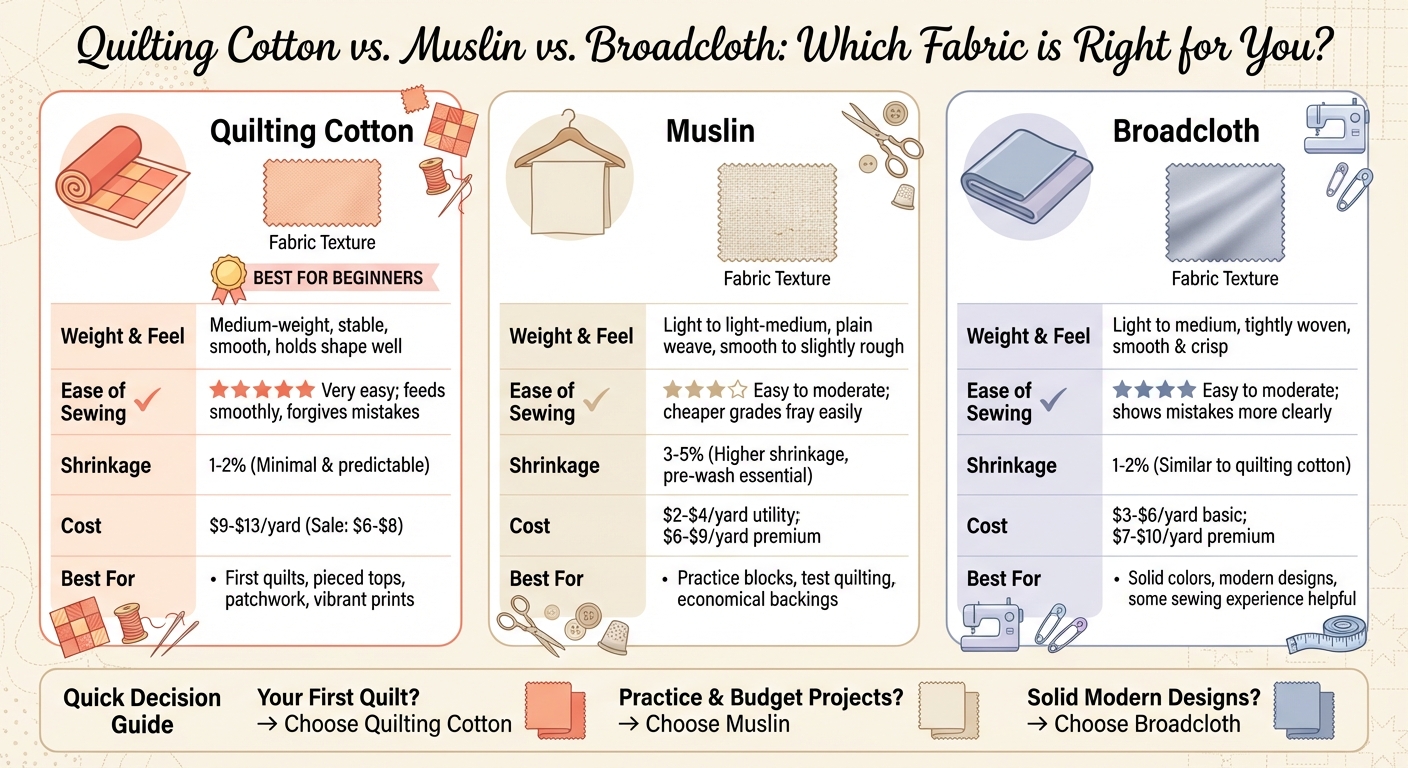
Beginner Quilting Fabric Comparison: Cotton vs Muslin vs Broadcloth
Here’s a side-by-side look at three popular fabric types to help you decide which one suits your first quilting project best.
| Fabric Type | Typical Weight & Feel | Ease of Sewing | Shrinkage | Cost (per yard) | Beginner Suitability & Best Uses |
|---|---|---|---|---|---|
| Quilting Cotton | Medium-weight, stable, smooth but not slippery; holds its shape well under the presser foot | Very easy; feeds smoothly and forgives minor mistakes | Minimal (around 1–2%); consistent and predictable | $9–$13 at full price; $6–$8 with sales or coupons | Best choice for first quilts; perfect for pieced tops, patchwork, and projects requiring vibrant prints and reliable results |
| Muslin | Light to light-medium weight; plain weave; texture ranges from slightly rough (utility grades) to smooth (premium quilting muslin) | Easy to moderate; cheaper, thinner muslin tends to fray and distort along bias edges; extra pins or a walking foot can help | More shrinkage than quilting cotton, especially in lower-cost grades; unbleached muslin may shrink and crinkle noticeably | $2–$4 for utility muslin; $6–$9 for premium quilting muslin | Great for practice blocks, test quilting, and economical backings; also works for simple tops if you choose high-quality muslin |
| Broadcloth (cotton) | Light to medium-weight; tightly woven with a smooth, crisp, shirt-like surface; can feel slightly stiffer than quilting cotton | Easy to moderate; cuts crisply and presses well, but fine weave shows needle holes and tension issues more clearly; less forgiving when unpicking seams | Similar to quilting cotton (around 1–2%); high-quality broadcloth is fairly consistent | $3–$6 for basic solids; $7–$10 for higher-end cotton broadcloth | Better for those with sewing experience; ideal for solid colors and modern quilt designs, though less forgiving than quilting cotton for beginners |
Quilting cotton remains the go-to choice for beginners, offering ease of use, minimal shrinkage, and a stable weave that lets you focus on building your skills. Muslin is an affordable option for practice projects and backings, while broadcloth suits quilters with some experience who want crisp, solid designs. For your first project, Mrs. Quilty's premium cotton fabrics are a reliable option, providing the quality and consistency you need to start strong.
Conclusion
Choosing the right fabric for your first quilt doesn’t have to be complicated. Quilting cotton is often the go-to choice for beginners. It’s sturdy, easy to work with, and comes in a wide range of vibrant designs that make your finished quilt a joy to show off. If you’re looking for an affordable option to practice skills like ¼-inch seams or free-motion quilting, muslin is a great pick. It’s also perfect for creating large quilt backings without stretching your budget. For simpler projects or utility quilts, broadcloth is another option. While its finer weave can be less forgiving when correcting mistakes, it’s a reliable choice for piecing practice.
To make things even easier, Mrs. Quilty’s quilt kits are designed with beginners in mind. Whether you’re crafting a baby quilt or a cozy throw, these kits include everything you need: premium 100% cotton fabrics, pre-cut fat quarters to save time, and step-by-step instructions that are easy to follow. Plus, video guides ensure you’re never left guessing. With over 65,000 satisfied customers and a 4.8/5 rating from 2,032 reviews, Mrs. Quilty has helped many beginners turn their first quilting attempts into projects they’re proud of.
Starting with high-quality quilting cotton allows you to focus on mastering essential skills like precise cutting, consistent seams, and smooth pressing - without the frustration of dealing with fabrics that stretch, fray, or bleed. Keep some muslin or broadcloth handy for practicing new patterns or designs before committing to your main quilt. While there’s no such thing as a “perfect” first quilt, using dependable materials from Mrs. Quilty ensures a smoother learning experience and makes quilting more enjoyable from the start.
Ready to begin your quilting journey? Explore Mrs. Quilty's beginner-friendly quilt kits for premium fabrics, clear instructions, and all the essentials to create a quilt you’ll cherish for years to come.
FAQs
Why is quilting cotton the best fabric for beginners?
Quilting cotton is a go-to fabric for beginners, and for good reason. It's simple to work with, long-lasting, and has a smooth, even texture that makes sewing a breeze. Its consistent weight and thread count help new quilters create clean, polished results without added stress.
Choosing high-quality quilting cotton, such as the curated selections from Mrs. Quilty, sets you up for success right from the start. These fabrics are thoughtfully chosen to be beginner-friendly, allowing you to focus on learning and enjoying the art of quilting!
What’s the best way to prepare muslin before quilting with it?
To get muslin ready for quilting, start by washing it in warm water with a mild detergent. This step removes any sizing and makes the fabric softer. Once washed, dry the muslin on low heat or let it air dry to avoid shrinkage. Taking these steps ensures your quilt will have a smooth and polished look.
Why is broadcloth a great fabric choice for beginner quilters?
Broadcloth is a great fabric for beginners thanks to its smooth, tightly woven texture that’s easy to work with and sew. Its strong construction ensures your quilts stay intact over time, while its refined finish gives your projects a neat, professional appearance. This blend of simplicity and dependability makes broadcloth a reliable option for learning and crafting stunning quilts.