
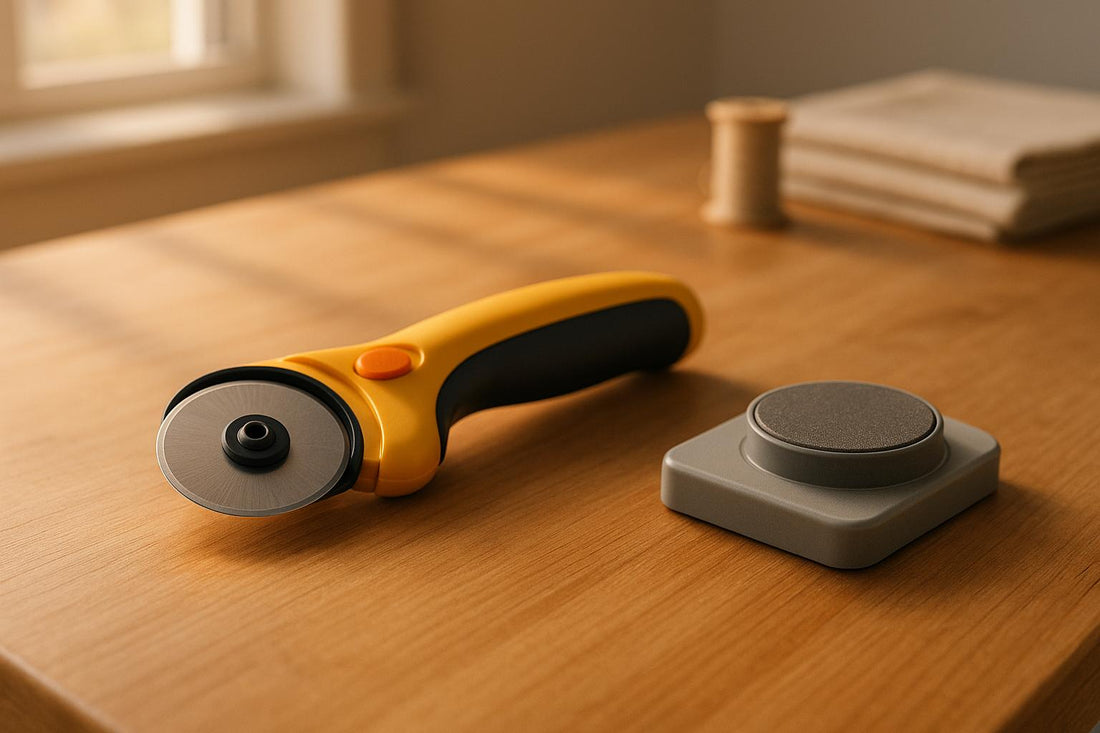
How to Sharpen Rotary Cutter Blades at Home
A sharp rotary cutter blade is key to clean, precise cuts and less wrist strain. Dull blades can ruin fabric edges and make cutting harder. You can sharpen your blades at home using sandpaper, a leather strop, or a sharpening block. These methods save money, reduce waste, and extend the life of your tools.
This guide covers safe disassembly, sharpening techniques, and maintenance tips to keep your rotary cutter in top shape.
Rotary cutter blade sharpening & maintenance | Craftsy quilting tutorial with Pepper Cory
Safety Steps and Getting Ready
Before sharpening your rotary cutter blade, it’s crucial to prioritize safety. These precautions not only help prevent injuries but also ensure your tool remains in good condition. Rotary cutter blades are incredibly sharp, and even a blade that feels dull can cause serious harm if mishandled.
Start by setting up a clean, well-lit workspace on a flat surface, away from distractions. Have a small container ready to hold screws and tiny parts that could easily go missing. A tidy and organized space gives you better control over the process and minimizes the chance of accidents. Once your area is set, you can begin dismantling the cutter for sharpening.
Safety Equipment You Need
Protective gear is a must when handling sharp tools. Wear cut-resistant gloves to shield your hands and use safety glasses or a face shield to guard your eyes against flying metal particles. As Toro emphasizes in their safety guidelines:
"To prevent possible personal injury, wear a face shield or safety glasses when grinding or sharpening is being done."
Make sure your workspace is well-ventilated to avoid breathing in fine metal dust. A small flashlight or desk lamp can also be helpful for closely examining the blade’s edge for any damage or imperfections.
How to Take Apart Your Rotary Cutter
Once your safety gear is on and your workspace is ready, it’s time to disassemble the cutter. Begin by retracting the blade completely into the handle using the cutter’s safety mechanism - this step reduces the risk of accidental cuts.
Carefully unscrew the fastener by turning it counterclockwise to remove the blade. Pay attention to the order of the components; typically, you’ll find a washer on each side of the blade, a center screw, and sometimes a spring mechanism. To avoid confusion during reassembly, take a quick photo of the parts as they are arranged.
Immediately place all small pieces into your container to keep them secure and organized. You might also label or arrange the parts in the order they were removed for easier reassembly later.
Before sharpening, inspect the blade closely for any visible issues such as chips, cracks, or excessive wear. Holding the blade up to the light can help you spot structural problems. If the damage is severe, it’s often safer and more effective to replace the blade rather than attempt sharpening.
2 Ways to Sharpen Rotary Cutter Blades at Home
Disassembled your rotary cutter? Great! Now, let’s explore two simple ways to sharpen those blades using items you might already have at home. These methods work well depending on how dull your blade is and the supplies you’ve got handy.
Method 1: Sandpaper Sharpening
If your blade is noticeably dull, fine-grit sandpaper can bring it back to life. Stick to 400- to 600-grit sandpaper - anything rougher could harm the blade’s edge.
Lay the sandpaper on your cutting mat with the abrasive side facing up. Hold the blade at a steady 20-degree angle, and gently draw it across the sandpaper, moving from heel to tip. Rotate the blade as you go, applying even pressure. Aim for about 15 passes on one side, then flip the blade over and repeat the process for the other side. This ensures both edges are evenly sharpened.
For an even finer edge, you can follow up with a leather strop or a sharpening block.
Method 2: Leather Strop or Sharpening Block
A leather strop is fantastic for maintaining the blade’s edge between full sharpening sessions. Add a small dab of polishing compound to the leather, then gently pull the blade away from the strop, refining its edge and removing any burrs.
If you’re using a sharpening stone, start by prepping it: soak a water stone for 10–15 minutes or apply a thin layer of oil to an oil stone. Then, hold the blade at the same 20-degree angle and move it across the stone from heel to tip. Repeat this motion 5–10 times on each side.
Once you’ve finished, test your blade’s sharpness by cutting through a piece of paper or cardboard. A well-sharpened blade should glide through cleanly, with no tearing or extra effort needed.
sbb-itb-907b860
How to Make Your Rotary Cutter Blades Last Longer
Taking good care of your rotary cutter blades not only saves you money but also reduces how often you need to sharpen them. A little maintenance goes a long way in keeping your blades sharp and ready for use.
Clean and Store Blades Properly
Blade care starts as soon as you’re done cutting. After quilting, gently clean off fibers and any adhesive residue using a soft cloth or cotton swab. This simple step helps prevent dulling before its time.
When storing your rotary cutter, make sure it’s in a dry spot with the safety guard securely closed. If you live in a humid area, tossing in a silica gel packet can help prevent rust from forming.
Use the Right Cutting Mats and Avoid Hard Surfaces
The surface you cut on plays a big role in how long your blades last. A self-healing cutting mat is your best bet - it protects the blade and reduces friction while cutting.
"Avoid cutting over pins as this can damage the blade edge and cause it to become dull quickly." - Kellie Rose
On the other hand, cheaper mats that lack self-healing properties or cutting on hard surfaces like granite or tile can wear your blade down much faster.
Keep Extra Blades Ready
Always have a few spare blades on hand. This way, you can swap out dull blades immediately. For better efficiency, save your sharpest blades for detailed or precision work, and use others for more general tasks. This rotation helps extend the overall lifespan of your blades.
Which Sharpening Method Works Best
When it comes to keeping your blades sharp, the right method depends on how often you use them and how quickly you need results. Here's a comparison of three popular techniques - aluminum foil, sandpaper, and a leather strop - to help you decide.
Aluminum foil sharpening is quick, easy, and budget-friendly. It’s perfect for those moments when you’re in the middle of a project and don’t have a spare blade handy. While it’s a temporary fix, it works well enough to get you through and can even sharpen other tools like scissors.
Sandpaper sharpening gives you more control over the process. By starting with coarser grit and moving to finer grit, you can achieve a consistently sharp edge. However, it does require some care and precision to avoid damaging the blade.
For those who quilt frequently, a leather strop or sharpening block is the go-to choice. This method creates a sharper and longer-lasting edge, and while it requires a small investment, it can extend the life of your blades significantly.
If you quilt occasionally, aluminum foil is a quick and practical option. Sandpaper offers more precision, making it great for controlled sharpening. For heavy use, a leather strop or sharpening block provides the best results and durability.
Keep in mind, though, that no sharpening method can save a blade that’s severely damaged. When that happens, it’s time to replace it. For high-quality replacement blades and quilting tools, check out Mrs. Quilty to keep your projects running smoothly.
FAQs
How can I tell if my rotary cutter blade needs sharpening?
If your rotary cutter blade has lost its sharpness, you’ll start to notice a few telltale signs: it might feel harder to cut through fabric, edges may come out jagged or uneven, and instead of smooth cuts, you could experience tearing. Sometimes, the blade may even skip over sections as you work. These problems can make your projects more challenging and less accurate, so it’s important to sharpen or replace the blade as soon as you spot these issues.
How often should I sharpen my rotary cutter blades to keep them working their best?
To ensure your rotary cutter blades stay in top shape, aim to sharpen them every 1 to 2 years or after around 15 to 20 hours of use. If you notice issues like skipped threads or uneven cuts, it’s wise to sharpen them sooner. Regular upkeep not only keeps your cuts clean and accurate but also helps your blades last longer.
What surfaces should I avoid cutting on to keep my rotary cutter blades sharp?
To keep your rotary cutter blades sharp for longer, steer clear of cutting on hard surfaces like concrete, tile, or wooden tables. These surfaces can dull or damage the blade much faster than you'd expect. Instead, use self-healing cutting mats. These mats are made to protect your blades while offering a smooth and efficient cutting surface. Also, avoid working on rough or uneven areas, as they can cause extra wear on your tools.