

Baby Quilt Kits: What to Include (and What Not To)
Baby quilt kits simplify the process of creating a heartfelt keepsake by including pre-selected fabrics, patterns, and instructions. However, not all kits are created equal. The best ones focus on softness, safety, and durability - key factors for a baby’s delicate skin and everyday use.
This guide explains what to include in a baby quilt kit, from fabric and batting to beginner-friendly patterns, while highlighting safety considerations and items to avoid. Whether you’re crafting for a loved one or starting your first quilt, this checklist ensures your project is safe, functional, and easy to complete.
What’s in a Baby Quilt Kit?
A baby quilt kit typically includes a quilt pattern and pre-selected fabrics for the quilt top. Advanced kits may also provide pre-cut pieces, batting, thread, and tools. For beginners, look for kits with clear instructions and larger fabric pieces (4 inches or more) for easier handling.
Fabric Options:
Choose soft, breathable materials like 100% quilting cotton or organic cotton for sensitive skin. Other great options include cotton flannel, double gauze, or bamboo fiber. Ensure fabrics are certified safe (e.g., OEKO-TEX Standard 100) and free from harmful chemicals.
- Cotton: Soft, breathable, and gives a crinkled look after washing.
- Polyester: Lightweight, durable, and resists mildew.
- Blends (80/20): Combines cotton’s breathability with polyester’s durability.
- Wool or Bamboo: Offers warmth and eco-friendly options.
Stick to low-loft batting for lightweight quilts suitable for babies.
Thread and Tools:
Neutral 50 wt. thread works best for quilting. Use an 80/12 universal needle and tools like a rotary cutter, self-healing mat, and acrylic ruler for precision. A walking foot helps feed multiple layers evenly.
What to Avoid in Baby Quilt Kits
Safety is critical when quilting for babies. Avoid:
- Small embellishments like buttons or beads (choking hazards).
- Strings or ribbons longer than 7 inches (strangulation risks).
- Rough fabrics or those treated with harsh chemicals.
- Oversized or heavy quilts that could pose suffocation risks.
Optional Add-Ons
Consider adding coordinated baby accessories like burp cloths or lovey quilts using leftover fabric. For gifting, include care instructions and personalized labels.
Ready to start your project? Mrs. Quilty’s kits include premium fabrics, beginner-friendly patterns, and everything you need to create a safe, cozy quilt. Explore the Mrs. Quilty Subscription Box for monthly inspiration and exclusive designs.
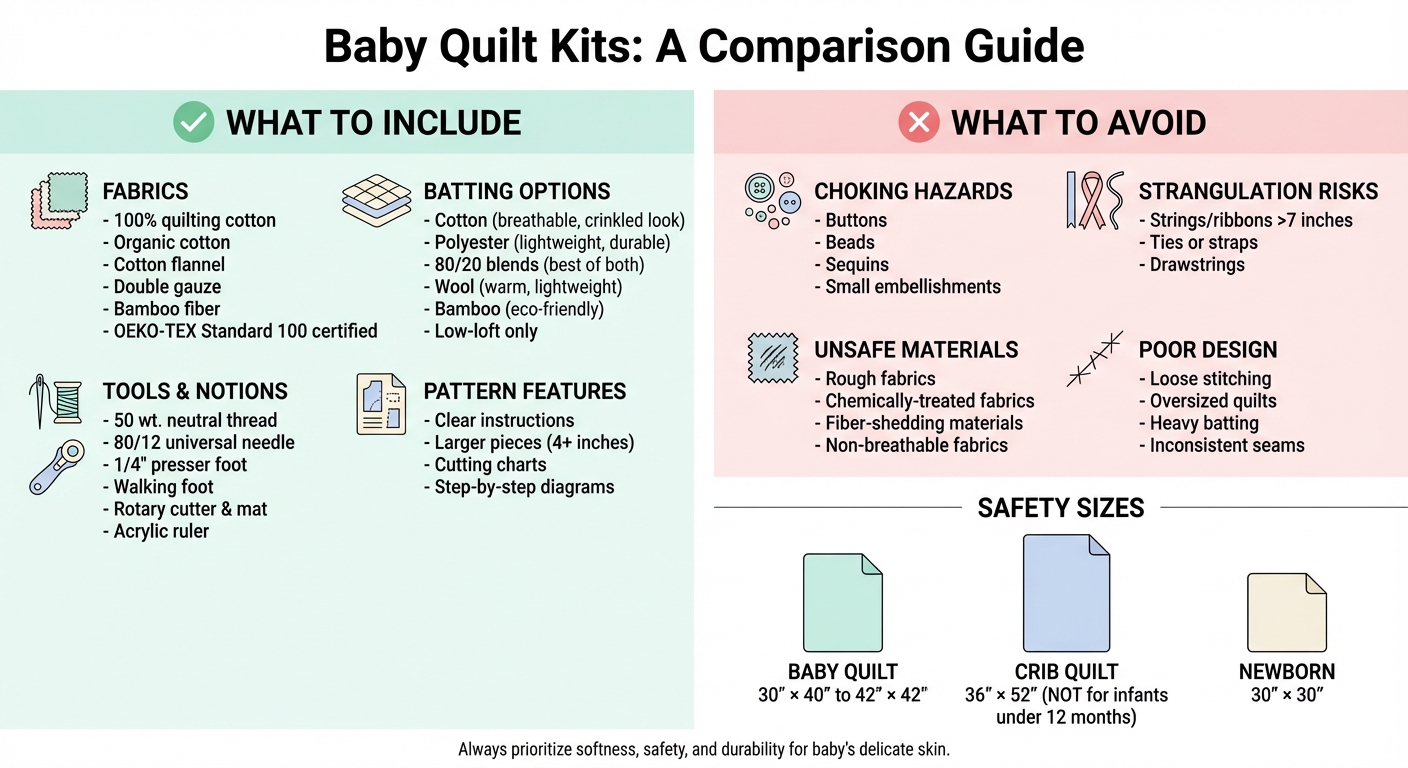
Baby Quilt Kit Components: What to Include vs. What to Avoid
What to Include in a Baby Quilt Kit
When putting together a baby quilt kit, it's all about balancing safety, comfort, and ease of use. A well-thought-out kit should include soft, baby-friendly fabrics, reliable batting, and clear instructions to simplify the process. Let’s explore the key components every quality kit should have.
Baby-Safe Fabric Options
The fabric is the heart of any quilt, especially for babies. 100% quilting cotton is a top choice. It's soft, breathable, and easy to wash - perfect for delicate skin. If you want an even safer option, go for organic cotton, which avoids exposure to harmful pesticides and chemicals, making it ideal for sensitive skin or allergies.
For added warmth, consider cotton flannel with its brushed texture, or double gauze, which is incredibly soft and breathable. Just remember to prewash double gauze and use a stitch length of 3.0–4.0 to prevent snags. Bamboo fiber is another excellent option, offering a hypoallergenic and breathable fabric with a lovely drape.
When shopping for fabrics, look for safety certifications like OEKO-TEX Standard 100. This ensures the material is free from harmful chemicals, heavy metals, and pesticides. As Agathe Verrier from Ma Petite Laine explains:
This standard guarantees that the fabrics contain no toxic chemicals, heavy metals or pesticides that could irritate baby's skin.
For baby textiles, formaldehyde content should not exceed 20 milligrams per kilogram. This is especially important as a baby’s skin is much thinner and more sensitive than an adult's. Once you’ve chosen your fabric, it’s time to consider the batting.
Batting Choices for Baby Quilts
Batting plays a big role in how warm, lightweight, and drapable your quilt feels. Cotton batting is a natural, breathable option that shrinks slightly after washing, giving quilts a cozy, crinkled look. Polyester batting, on the other hand, is lightweight, durable, and resists mildew, making it great for quilts that will see frequent washes. Cotton/polyester blends (80/20) offer the best of both worlds, combining cotton's breathability with polyester's durability.
For extra warmth, wool batting is a fantastic choice - lightweight yet cozy. If you're looking for something eco-conscious, bamboo batting is lightweight and versatile, suitable for year-round use.
For quilts that will endure frequent washing, opt for low loft batting with a scrim for added stability. And if you’re making microwave-safe accessories like bowl cozies, stick with 100% cotton batting to avoid any risks - polyester can melt or catch fire. With your batting and fabric ready, the next step is selecting the right thread and tools.
Thread, Notions, and Tools
The right thread and tools make quilting easier and more enjoyable. A 50 wt. thread works well for delicate fabrics like double gauze. Neutral colors - cream, tan, beige, white, or gray - blend seamlessly with most fabrics. As the National Quilters Circle advises:
A medium-weight quilting thread in a neutral color like cream, tan, beige, white, or grey - they tend to blend in best with your fabric.
Choose a universal 80/12 needle for precise piecing, and replace it with each new project. A 1/4" presser foot ensures consistent seam allowances, while a walking foot helps feed multiple layers through your machine evenly - especially useful for binding and quilting straight lines.
For cutting, include a self-healing cutting mat, a rotary cutter with a safety clasp, and an acrylic ruler. A Hera marker is a great tool for marking quilting lines without leaving stains. Safety pins are essential for basting, and straight pins help with piecing. Keep a seam ripper and small scissors handy for trimming threads.
When it comes to thread usage, plan for 200–600 yards of top thread depending on the quilting density. If you’re using the same thread for the bobbin, double these amounts.
Beginner-Friendly Patterns and Instructions
Clear, beginner-friendly patterns make all the difference. Look for designs with larger blocks or strips (at least 4 inches wide) as they’re easier to handle. Patterns should include cutting charts, finished dimensions, and fabric requirements, along with step-by-step instructions.
For beginners, simple shapes like squares or rectangles work best. Diagrams showing block assembly and layout can help simplify the process. If the kit includes thicker batting like wool, the instructions should recommend cutting binding strips wider (e.g., 2 5/8" instead of 2 1/4") to fully cover the edges.
Mrs. Quilty Kits and Components
Mrs. Quilty’s kits bring together all these elements in one thoughtfully designed package. Each kit includes premium cotton fabrics chosen for their softness and safety, along with exclusive patterns tailored for beginners. Many kits even feature pre-cut pieces, saving you the hassle of measuring and cutting.
For ongoing inspiration, the monthly subscription box costs $34.97/month and delivers over $120 in value. It includes coordinated fabrics, exclusive patterns, tutorials, a magazine, and surprise gifts. If you prefer digital options, the Digital Pattern Subscription at $14.97/month offers eight exclusive digital patterns free with your first box - instant downloads valued at $71. You can also browse individual quilting supplies across more than 15 categories to customize your kit or refresh your stash.
sbb-itb-907b860
Safety Features for Baby Quilts
When creating a baby quilt, safety should be a top priority. A well-made quilt isn’t just soft and comforting - it’s also secure, durable, and free from potential hazards. Here are some essential safety features to keep in mind.
Secure Quilt Construction
Strong seams are the backbone of a safe quilt. Stick to a consistent 1/4-inch seam allowance for most fabrics, but for delicate materials like double gauze, a wider allowance (3/8 to 1/2 inch) paired with a stitch length of 3.0–4.0 offers extra security. Bindings should be machine-stitched on the front and hand-stitched on the back to ensure durability. If you’re using wool batting, opt for wider binding strips (e.g., 2 5/8 inches instead of 2 1/4 inches) to fully cover the edges. Every Mrs. Quilty kit incorporates these construction techniques to enhance both durability and safety.
Size, Weight, and Washing Guidelines
The right size and weight make a big difference in quilt safety. For baby quilts, standard dimensions range from 30 x 40 inches to 42 x 42 inches - perfect for strollers, car seats, or playtime on the floor. Crib quilts, typically 36 x 52 inches, should not be used in cribs for infants under 12 months, as they pose risks of suffocation and SIDS.
Choose low-loft batting to keep the quilt lightweight. Cotton batting is breathable and softens beautifully with washing, while polyester maintains its shape and offers durability. After the quilt is finished, wash it in cold or warm water and tumble dry on low heat to maintain the fabric and batting quality.
Allergy-Friendly Materials
Since babies have sensitive skin, hypoallergenic materials are a must. Use 100% cotton for the quilt top, backing, and binding to ensure a gentle, skin-safe fabric. For batting, natural options like cotton, wool, or bamboo are excellent choices. Cotton provides breathability and softness, wool offers warmth without added weight, and bamboo is lightweight and suitable for all seasons. Pre-wash fabrics with fragrance-free detergents or those formulated for sensitive skin, and skip fabric softeners to avoid residue. For added reassurance, look for fabrics certified under OEKO-TEX Standard 100, which ensures they are free from harmful chemicals and irritants.
Care Instructions and Safety Labeling
Clear care instructions are essential to help parents keep the quilt safe and in good condition. Include a care card that recommends washing in cold or warm water and tumble drying on low heat. Be sure to warn against using quilts in cribs for infants under 12 months, as they are not flame-retardant and could increase the risk of SIDS. Encourage parents to inspect the quilt regularly for loose threads, fraying seams, or any signs of wear, especially on quilts with ties or embroidery. Mrs. Quilty products come with these safety measures in mind, offering parents peace of mind and a safe, cozy quilt for their little ones.
What Not to Include in a Baby Quilt Kit
When creating a baby quilt kit, safety and comfort must come first. While it's vital to include the right materials, it's just as important to know what to leave out. Certain elements, if included, could pose serious risks to infants, from choking hazards to skin irritation. Here's a guide to what should never make its way into a baby quilt kit.
Choking and Strangulation Hazards
Avoid adding small decorative items like buttons, beads, or sequins. These might seem charming, but they can easily become choking hazards if they come loose. Incidents have shown that tiny embellishments in baby bedding can lead to dangerous situations when infants pull them off and accidentally swallow them.
Similarly, strings, ribbons, or cords longer than 7 inches can pose strangulation risks. Ties or straps that could wrap around a baby's neck are particularly unsafe, especially drawstrings designed for neck or waist areas. If your quilt design includes ties, ensure they are short enough to eliminate any danger. For decoration, stick with appliqués or decorative stitching rather than physical embellishments to keep the quilt attractive yet secure.
Rough or Unsafe Materials
Fabrics that are rough or abrasive can irritate a baby's delicate skin. As Alyssa Moylan points out:
Babies have sensitive skin; a little disbalance with the hygiene factor may result in severe health problems.
Materials that shed fibers can also be hazardous, as fibers may get into a baby's nostrils or eyes, potentially causing respiratory issues or discomfort. Additionally, fabrics treated with harsh chemicals are often less breathable, increasing the risk of overheating. Always opt for soft, natural fabrics and pre-wash them to remove any chemicals or dirt that could cause skin reactions.
Unsafe or Impractical Designs
Quilts with loose stitching or inconsistent construction can compromise both durability and safety. Weak seams or loose threads can lead to tears, holes, or entanglement risks, so regular inspections are a must.
Oversized or heavy quilts are another concern. To ensure a lightweight and breathable design, stick to standard baby quilt sizes. For newborns, a 30" × 30" quilt works well, while crib quilts typically measure around 36" × 52". These dimensions are both safe and practical for everyday use, ensuring the quilt remains functional without posing risks.
Every Mrs. Quilty kit is thoughtfully designed with these safety considerations in mind. By excluding these potentially hazardous elements, the kits ensure that your project is not only beautiful but also safe for the little ones who will use it.
Optional Add-Ons for Baby Quilt Kits
Once you've assembled a safe and cozy baby quilt kit, you can take it a step further by adding thoughtful extras. These additions not only expand the functionality of your quilt but also let you personalize your project in fun and practical ways - all while maintaining the safety and softness your little one deserves. With these optional add-ons, your Mrs. Quilty kit can become part of a complete nursery collection.
Coordinated Baby Accessories
Using extra fabric, you can create matching accessories to complement your quilt. Think burp cloths, lovey quilts, swaddle blankets, patchwork pillows, or even nursery wall hangings. Some kits include "Cuddle Kits", which pair the quilt with matching plush items, while others provide materials for coordinated nursery décor. These thoughtful additions bring a cohesive and charming look to your baby’s space.
Organization and Gifting Touches
Keeping things organized during your quilting process can make a world of difference. Labeled storage bags and adhesive tags are perfect for separating and identifying pre-cut fabric squares, lightweight baby quilt batting, and binding strips. For a personal touch, consider adding iron-on or sew-on care tags where you can jot down the baby’s name, the date, or washing instructions. Printed checklists can also help you track your progress and ensure every piece stays in place.
Mrs. Quilty Subscription Box Extras
The Mrs. Quilty subscription box is a fantastic way to keep your creativity flowing. Each month, it delivers coordinated fabrics and exclusive patterns that pair beautifully with baby quilts and matching accessories. These fresh designs can inspire new projects and add variety to your quilting journey. For more details, check out earlier sections on subscription benefits.
FAQs
What should I consider to ensure fabrics are safe for a baby quilt?
When picking fabrics for a baby quilt, go for soft, breathable natural cotton that’s been pre-washed. Pre-washing helps eliminate shrinkage and removes any residual chemicals. Steer clear of materials with loose threads, small embellishments, or detachable parts, as these could become choking hazards. It’s also essential to ensure the fabric meets U.S. crib safety and flammability standards to minimize risks like overheating or suffocation. Choosing safe, high-quality materials ensures the quilt will be both snug and safe for the baby.
Why should certain decorations or embellishments be avoided in baby quilt kits?
When creating a baby quilt, safety should always come first. Avoid using embellishments such as buttons, beads, or sequins, as they can detach over time and become choking hazards. Decorations with sharp edges or rough textures should also be avoided, as they might irritate a baby's delicate skin.
For a quilt that’s both safe and comfortable, opt for soft, durable fabrics and ensure the stitching is secure. This way, you can craft a cozy and charming keepsake without compromising on safety.
How can I safely personalize a baby quilt kit for an infant?
To make a baby quilt kit special and safe, start with soft, breathable fabrics like cotton or flannel - perfect for a baby’s delicate skin. Add a unique touch by incorporating a monogram, appliqué, or fabrics that match the nursery's theme. Be sure to use infant-safe thread and double-check that all seams are securely stitched to avoid any loose threads or small parts. Stick to simple, sturdy quilting techniques, whether you prefer hand-stitching or machine quilting, to ensure the quilt stays intact and baby-friendly. Above all, focus on creating something both safe and cozy for little ones.